
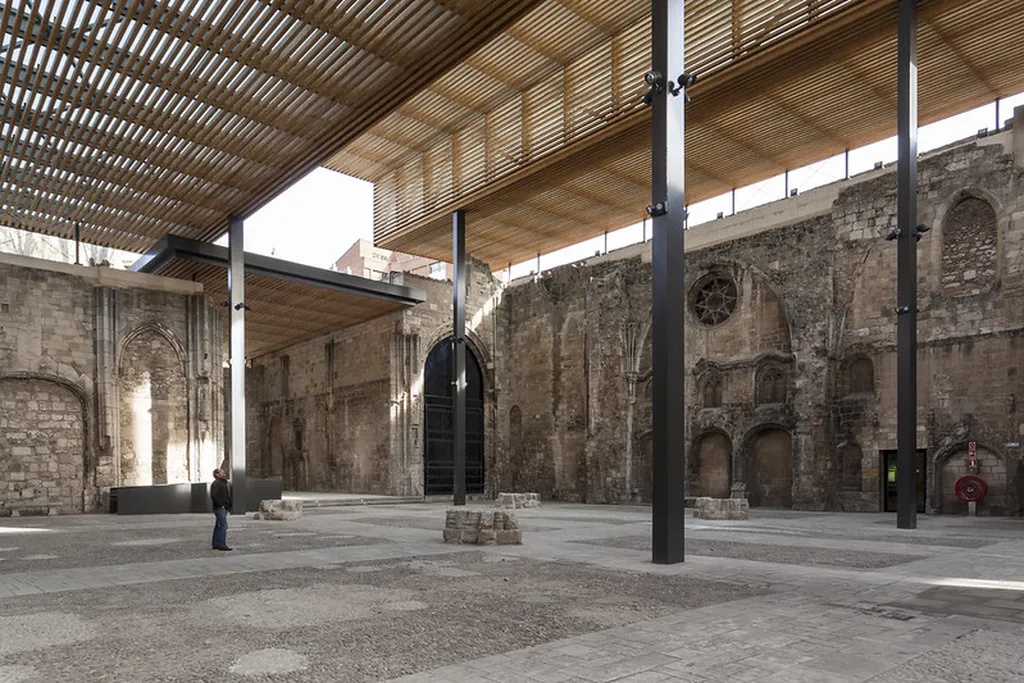
In the heart of Ávila, Spain, a historic convent is revealing secrets that could reshape our understanding of 16th-century construction techniques and offer valuable insights for modern architecture and the energy sector. The Convento de Nuestra Señora de Gracia, with its unique roof structure spanning two buildings constructed centuries apart, has become the subject of a fascinating study led by M. Ángeles Benito Pradillo from the Department of Construction and Architectural Technology at the Universidad Politécnica de Madrid.
The convent’s roof, a marvel of engineering, covers two distinct blocks: the southern block, built in the 16th century, and the western block, constructed in the mid-20th century. This unusual configuration has piqued the interest of researchers, who sought to unravel the mysteries of its construction process. “The roof is a testament to the ingenuity of the era, and understanding its construction can provide valuable insights for modern architecture,” Benito Pradillo explained.
The research, published in ‘Informes de la Construccion’ (translated to ‘Construction Reports’), employed a multi-faceted approach to decipher the roof’s construction. The team began by consulting existing plans and photographs, followed by detailed on-site measurements. Non-destructive testing (NDT) methods were then used to gather data without altering the structure. Finally, laboratory analyses and structural simulations were conducted to verify the proposed hypotheses.
One of the key findings revolves around the use of wooden trusses, a common feature in historic Spanish architecture. The study suggests that the roof’s construction likely involved a meticulous process of assembling these trusses, known as “par e hilera,” and integrating them into the overall structure. This technique, combined with the use of “cercha española” (Spanish truss), highlights the advanced engineering skills of the period.
The implications of this research extend beyond historical preservation. Understanding the construction techniques of the past can inform modern architectural practices, particularly in the energy sector. For instance, the insights gained from this study could inspire more efficient and sustainable design strategies, reducing energy consumption in buildings. “By learning from the past, we can innovate for the future,” Benito Pradillo noted.
As the energy sector continues to seek sustainable solutions, the lessons from historic architecture become increasingly relevant. The Convento de Nuestra Señora de Gracia stands as a testament to the enduring value of traditional construction techniques, offering a blueprint for future developments in the field. This research not only sheds light on a remarkable piece of history but also paves the way for more energy-efficient and sustainable architectural practices.