
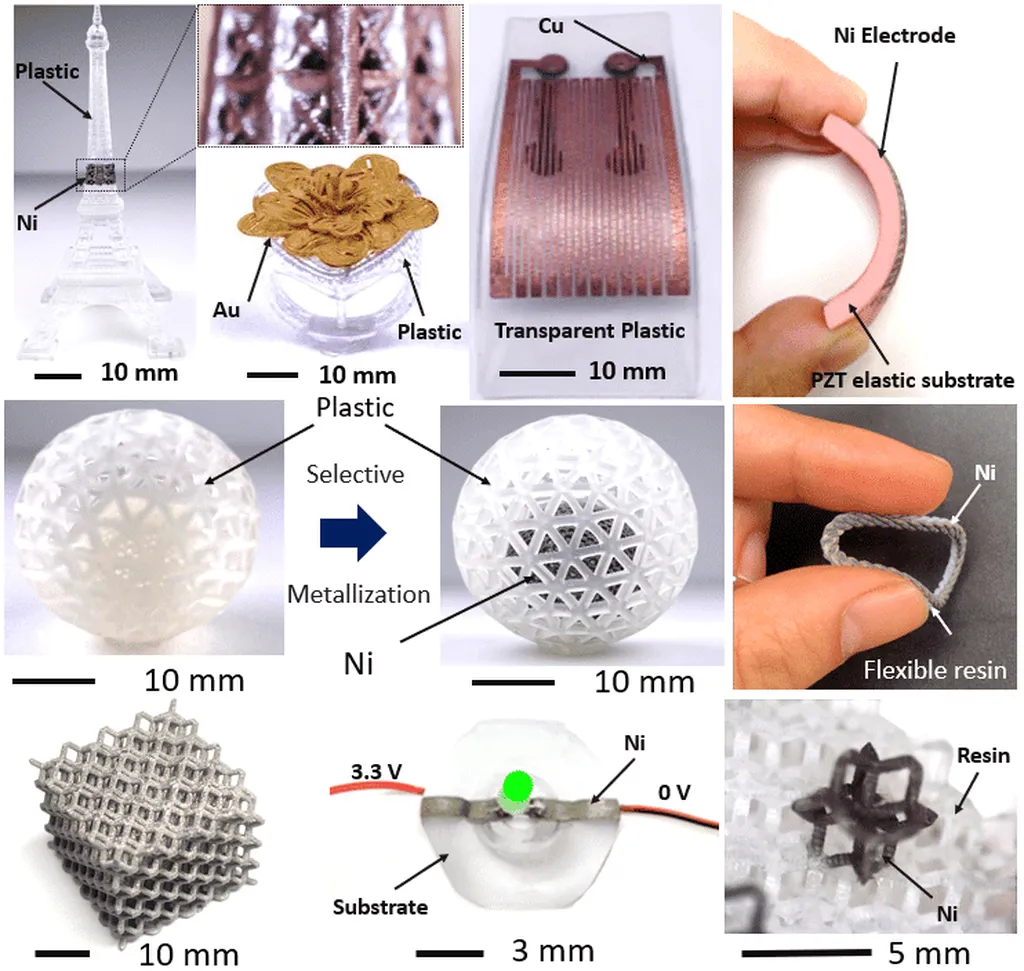
In the rapidly evolving world of additive manufacturing, a groundbreaking study led by Kinga Kardos at the 3D Printing and Visualization Centre of the University of Pecs in Hungary is shedding new light on the potential of polymer-metal composites for biomedical applications and beyond. Published in the journal *Macromolecular Materials and Engineering* (translated from German as “Macromolecular Materials and Engineering”), the research delves into the mechanical, structural, and biological properties of copper- and bronze-filled polylactic acid (PLA) composites, offering valuable insights for the energy sector and other industries.
The study focuses on commercially available copper- and bronze-filled PLA composites printed using Fused Filament Fabrication (FFF), a widely used 3D printing technology. Kardos and her team conducted a comprehensive analysis, including static and dynamic mechanical tests, scanning electron microscopic imaging, and electric resistance measurements. They also assessed the thermal properties through thermal conductivity measurements, differential scanning calorimetry, and thermogravimetric analysis (DSC-TGA). Cytotoxicity was evaluated using an A549 cell viability assay.
One of the key findings is that the brittleness of the material increases with the volume percentage of metal particles. For instance, the copper composite FormFutura MetalFil – Classic copper, with 29.14% volume of metal particles, exhibited a lower tensile strength of 15.4 MPa ± 0.17 MPa. Similarly, the bronze composite ColorFabb BronzeFill, with 33.64% volume of metal particles, had a tensile strength of 17.7 MPa ± 0.54 MPa. “These results highlight the trade-off between metal content and mechanical properties, which is crucial for designing materials tailored to specific applications,” Kardos explained.
The study also revealed that these composites have no cytotoxic effect in short-term contact, making them promising candidates for biomedical applications. Additionally, their enhanced thermal conductivity over traditional prosthetic materials could mitigate thermal discomfort, a significant advancement in the development of prostheses.
The implications of this research extend beyond the biomedical field. In the energy sector, the use of polymer-metal composites could lead to the development of more efficient and durable components for renewable energy systems. For example, the enhanced thermal conductivity of these materials could improve the performance of heat exchangers and other thermal management systems, which are critical for solar and geothermal energy applications.
Moreover, the study’s findings could pave the way for innovations in 4D printing, where materials can change shape in response to external stimuli. “The dynamic mechanical properties of these composites make them ideal candidates for 4D printing applications, where materials need to adapt to changing environments,” Kardos noted.
As the energy sector continues to seek sustainable and efficient solutions, the insights provided by this research could shape the development of next-generation materials. By understanding the mechanical, structural, and biological properties of polymer-metal composites, industries can harness their full potential to create innovative and sustainable technologies.
In conclusion, Kardos’s research offers a comprehensive analysis of copper- and bronze-filled PLA composites, providing valuable insights for the biomedical field, the energy sector, and beyond. The study’s findings highlight the importance of material characterization in the development of advanced composites, paving the way for future innovations in additive manufacturing and 4D printing.