
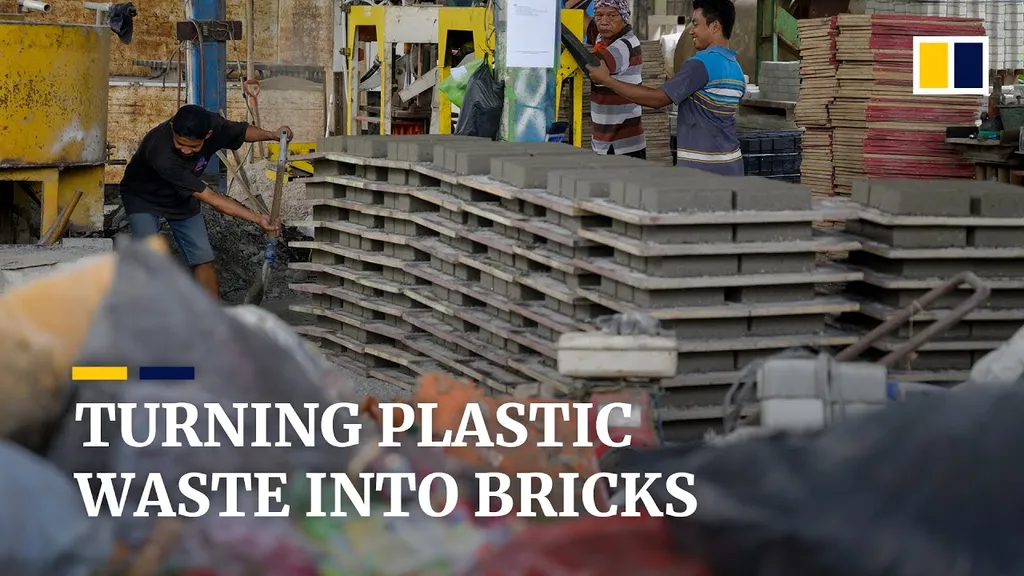
In the bustling world of construction and materials science, a groundbreaking study has emerged that could reshape how we think about waste management and seismic safety. Luqman Cahyono, a researcher from the Ship Building Engineering Department at the Shipbuilding Institute of Polytechnic Surabaya in Indonesia, has published a study in the journal *Rekayasa Sipil* (translated to English as “Civil Engineering”) that transforms sandblasting waste into eco-friendly construction materials. This innovation not only addresses environmental concerns but also offers promising solutions for earthquake mitigation.
Sandblasting waste, a byproduct of ship repair activities, has long been a challenge due to its heavy metal and corrosive residues, categorizing it as hazardous waste. However, Cahyono’s research demonstrates that this waste can be repurposed into lightweight bricks made of Cellular Lightweight Concrete (CLC). “We found that sandblasting waste meets the gradation requirements and passes physical tests, making it a viable alternative to traditional construction materials,” Cahyono explains. The study reveals that these bricks, composed of a 1:1 ratio of cement and sandblasting waste, exhibit impressive properties. With a foam agent content of 5%, the bricks achieve a compressive strength of 7.28 MPa and a density of 1,283.33 kg/m³, significantly lighter than conventional concrete blocks and red bricks.
The implications for the construction industry are substantial. Lighter materials reduce inertial forces and loads on structures, enhancing resistance to initial collapse during earthquakes and facilitating easier dismantling for post-earthquake evacuation. “This research shows that we can turn a waste product into a valuable resource, contributing to both environmental sustainability and seismic safety,” Cahyono adds. The commercial potential is vast, particularly in regions prone to seismic activity where lightweight, durable materials are in high demand.
Beyond earthquake mitigation, the study highlights the broader environmental benefits. By repurposing sandblasting waste, the construction industry can reduce its reliance on traditional materials, lowering carbon footprints and promoting a circular economy. “This innovation aligns with global efforts to minimize waste and maximize resource efficiency,” Cahyono notes. The research published in *Rekayasa Sipil* underscores the importance of interdisciplinary collaboration in addressing complex challenges.
As the construction industry continues to evolve, Cahyono’s work offers a blueprint for future developments. The integration of waste materials into construction not only reduces environmental impact but also enhances structural performance. This study paves the way for further exploration into alternative materials and their applications, driving innovation and sustainability in the field. With ongoing advancements, the construction sector can look forward to a future where waste is not just managed but transformed into valuable, high-performance materials.