
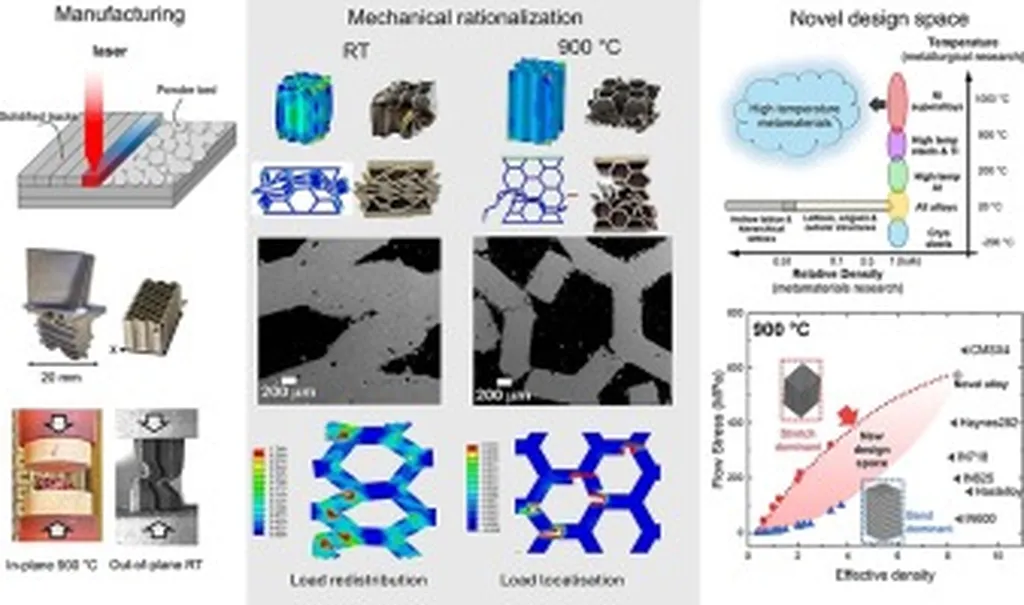
In a significant stride towards enhancing the performance of materials used in extreme environments, researchers have uncovered a method to optimize the mechanical properties of nickel-based superalloys fabricated through laser powder bed fusion (LPBF). This breakthrough, led by Chuanwen Sun from the School of Mechanical Engineering at Beijing Institute of Technology, could have profound implications for the energy sector, particularly in applications that demand high-temperature resilience.
The study, published in the Review of Materials Research (translated from its original Chinese title), delves into the effects of heat treatment on the microstructure and mechanical properties of nickel-based superalloys. These alloys are crucial in industries such as aerospace and energy, where materials must withstand extreme temperatures and pressures.
Sun and his team examined the microstructures of samples in three states: as-built, solid solution, and solution aging. Using advanced techniques like optical microscopy, scanning electron microscopy, and electron backscatter diffraction, they observed that heat treatment effectively eliminates laser scan tracks and relieves residual stresses. “The heat treatment process is pivotal in refining the microstructure, which in turn enhances the material’s mechanical properties,” Sun explained.
One of the key findings was the dissolution of the Laves phase and the precipitation of needle-like or short rod-like δ phases during the solid solution treatment. The double-step aging treatment further refined the δ phase and precipitated γ′ and γ” phases, contributing to the material’s strength and durability.
The impact of these treatments on mechanical properties was substantial. At room temperature (25°C), solution aging increased the yield strength by 66.3% and tensile strength by 33.2%. Even at elevated temperatures (650°C), the improvements were notable, with yield strength increasing by 54.1% and tensile strength by 29.8%. “These enhancements are crucial for applications in high-temperature environments, such as gas turbines and other energy sector components,” Sun noted.
The research also revealed that the tensile fracture modes of the specimens in all three states at both temperatures were ductile fractures, indicating good resistance to elevated temperatures in the elastic tensile stage.
The commercial implications of this research are vast. In the energy sector, where materials must perform reliably under extreme conditions, the optimized mechanical properties of these superalloys can lead to more efficient and durable components. This could translate into cost savings, improved performance, and extended lifespans for critical equipment.
As the energy sector continues to evolve, the demand for materials that can withstand harsh environments will only grow. This research provides a promising pathway to meet these demands, potentially shaping the future of material science and engineering in the energy industry.
In the words of Sun, “This study not only advances our understanding of heat treatment effects on nickel-based superalloys but also paves the way for their broader application in high-performance industries.” With these findings, the energy sector can look forward to more robust and reliable materials, driving innovation and efficiency in the years to come.