
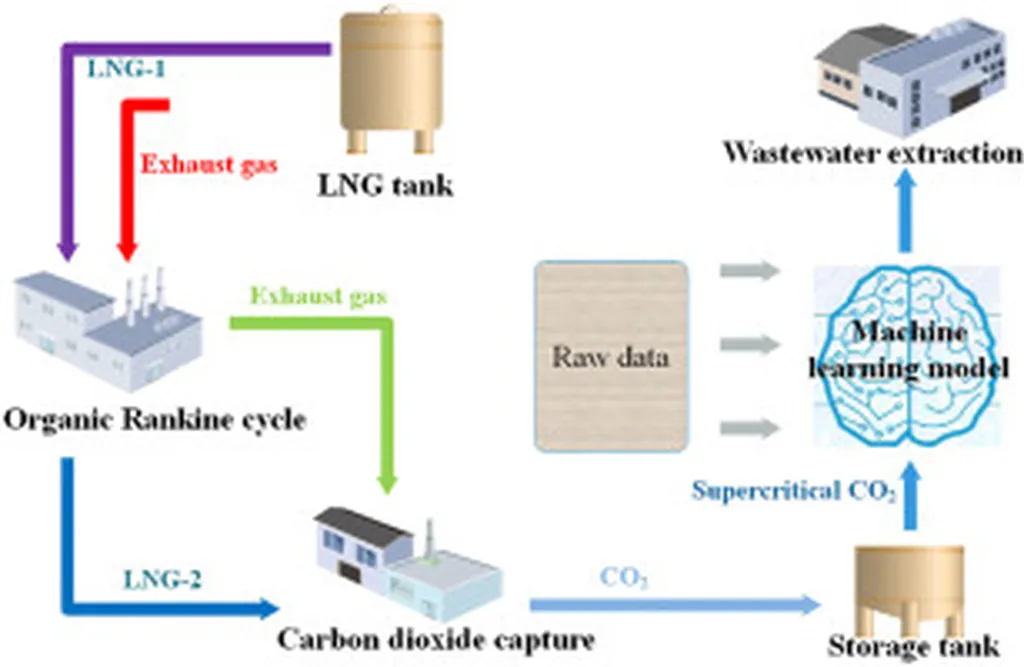
In the pursuit of a low-carbon future, researchers have turned their attention to an often-overlooked resource: the cold energy released during the regasification of liquefied natural gas (LNG). A recent study published in *Zhileng xuebao* (translated as *Acta Aeronautica et Astronautica Sinica*) sheds light on the progress and prospects of LNG cold-energy cascade utilization, offering promising insights for the energy sector.
Led by Liu Muyu and a team of researchers, the study systematically reviews the technological advancements, application scenarios, and future challenges of harnessing LNG cold energy. The research underscores the critical role of efficient cold-energy utilization in facilitating the low-carbon transition of the energy structure and promoting resource recycling.
The study identifies three primary temperature ranges for cold-energy recovery: deep cryogenic (-162 ℃ to -100 ℃), mid-cryogenic (-100 ℃ to -50 ℃), and low cryogenic (-50 ℃ to 0 ℃). Current mainstream technologies include cold-energy power generation, air separation, freezing/cold storage, and CO₂ capture. Among these, air separation stands out with the highest maturity level (TRL9), boasting large-scale applications in multiple domestic receiving terminals.
“Air separation has reached a significant milestone in terms of technological readiness,” says Liu Muyu, lead author of the study. “It has been successfully implemented in various domestic receiving terminals, demonstrating its potential for widespread adoption.”
Cold-energy power generation, with a technology readiness level of TRL8, has also shown substantial improvements through combined cycle optimization. However, challenges remain in terms of system complexity and stability. The study highlights that the LNG cold-energy utilization rate in China is generally low, primarily constrained by an uneven spatiotemporal distribution, weak process coupling, and insufficient industrial chain coordination.
To address these challenges, the researchers propose three key directions for future efforts: optimizing the construction layout by establishing industrial parks for onsite cold-energy consumption, constructing a comprehensive evaluation system to promote efficient cascade utilization of cold energy through multimode collaboration, and enhancing the flexibility and stability of cold-energy utilization by developing energy-storage systems.
“The potential for LNG cold-energy utilization is immense,” says Chen Zhewen, a co-author of the study. “By focusing on these key areas, we can unlock new opportunities for the energy sector and contribute to a more sustainable future.”
The study provides valuable recommendations and references for the technological optimization and industrial development of LNG cold-energy cascade utilization. As the energy sector continues to evolve, the insights from this research could shape future developments and pave the way for more efficient and sustainable energy solutions.
Published in *Zhileng xuebao*, the study offers a comprehensive overview of the current state and future prospects of LNG cold-energy utilization, highlighting the importance of technological innovation and industrial collaboration in achieving a low-carbon energy transition.