
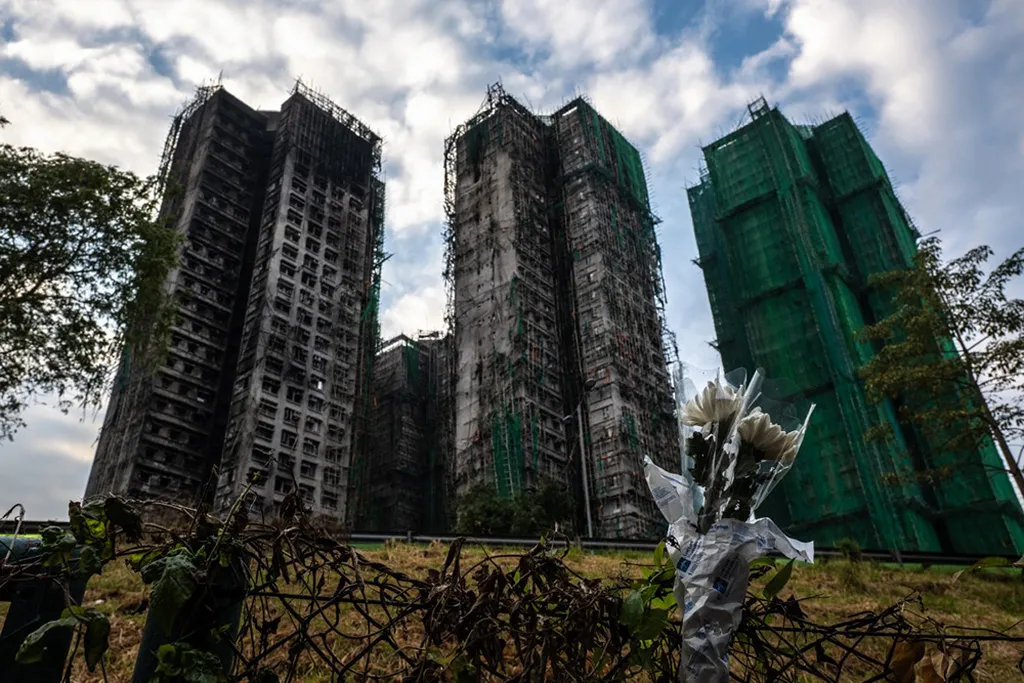
In the high-stakes world of construction, where safety and efficiency are paramount, a groundbreaking study led by Tianyu Wang from the School of Civil Engineering is set to revolutionize the way we approach high-risk structural engineering projects (HRSEPs). Published in the esteemed journal *Advances in Civil Engineering* (translated as “Advances in Civil Engineering”), this research delves into the critical issue of displacement risks in large-span structures, offering innovative solutions that could reshape the industry.
The study focuses on the unique challenges posed by the large-span characteristics of HRSEPs, which often lead to significant safety concerns. Wang and his team have developed a novel strategy that combines the whole synchronous casting of beam segments with the step-by-step casting of wall panels. This method is further enhanced by the use of contact monitoring equipment to track displacement changes in real-time. “By adopting this approach, we can achieve a more precise and dynamic understanding of structural displacement during construction,” Wang explains.
The research highlights the importance of real-time monitoring, which allows for the immediate detection of abnormal displacement phenomena. This proactive approach not only improves safety but also significantly boosts construction efficiency. “Our findings demonstrate that the proposed strategy can markedly enhance the safety and efficiency of long-span structural engineering projects,” Wang notes.
The implications of this research extend far beyond the construction industry. The energy sector, which often involves the construction of large-scale, high-risk structures such as wind turbines and offshore platforms, stands to benefit greatly from these advancements. By ensuring the safety and efficiency of these projects, the energy sector can reduce costs, minimize downtime, and ultimately deliver more reliable and sustainable energy solutions.
Moreover, the study provides valuable insights for professional engineers and designers working on complex engineering projects. The detailed analysis of displacement dynamics and the identification of causes of abnormal displacement offer a comprehensive guide for improving construction design and practices. “This research not only provides key construction design guidance for professional engineers but also serves as an important reference for the design of complex engineering projects in other fields,” Wang adds.
As the construction industry continues to evolve, the need for innovative solutions to enhance safety and efficiency becomes increasingly critical. This research by Tianyu Wang and his team represents a significant step forward in this direction, offering a blueprint for the future of high-risk structural engineering. By embracing these advancements, the industry can look forward to a safer, more efficient, and more sustainable future.