
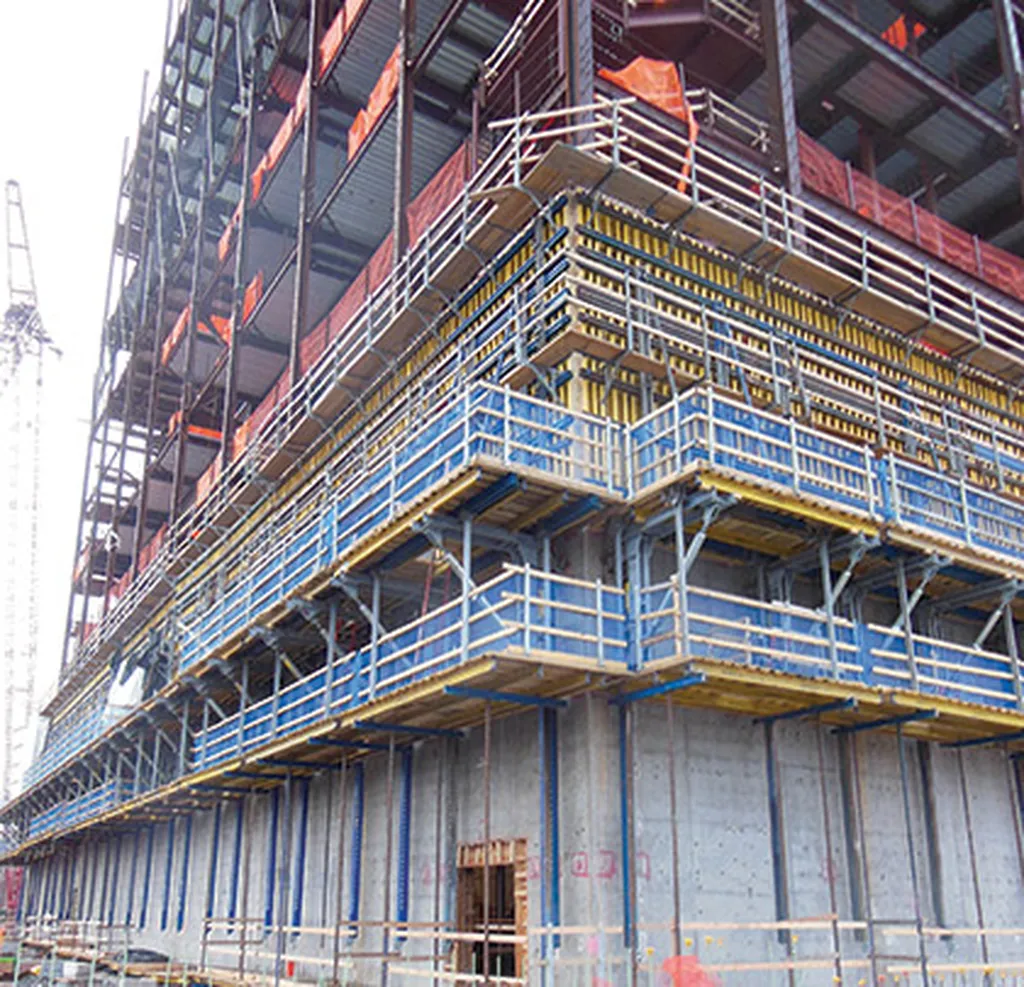
In the heart of winter construction, a critical challenge emerges: ensuring the safety and integrity of early-age concrete in climbing formwork systems. A recent study published in *Jianzhu Gangjiegou Jinzhan* (Advances in Structural Concrete) sheds light on the shear performance of climbing formwork connectors in low-temperature environments, offering insights that could reshape construction practices in the energy sector.
Led by Zhou Weishan, the research delves into the often-overlooked risks of frost damage to early-age concrete during the formwork climbing process. “In winter, parts of the concrete can be exposed to low temperatures, which poses a significant risk to the shear performance of the connectors,” Zhou explains. This vulnerability not only jeopardizes structural integrity but also raises safety concerns for workers on-site.
To tackle this issue, Zhou and his team designed six test specimens and conducted push-out experiments, simulating real-world conditions. They also developed a finite element model using ABAQUS software, incorporating the constitutive relationships of concrete and steel at low temperatures. The study varied parameters such as temperature, concrete age, and the diameter and strength of shear bolts, providing a comprehensive analysis of the factors at play.
The results were enlightening. Lower temperatures led to brittle failure of the specimens, increasing their shear capacity and initial stiffness but reducing ductility. “Extending the concrete’s age under the same conditions enhances the connector’s load-bearing capacity but diminishes its ductility,” Zhou notes. Interestingly, higher-strength bolts had a minimal impact on shear performance but significantly improved ductility.
The study also compared the results with various international standards, revealing that current regulations tend to underestimate the shear capacity of early-age concrete connectors in low-temperature conditions. This finding could prompt a reevaluation of safety margins and design codes, potentially leading to more efficient and cost-effective construction practices.
For the energy sector, where large-scale concrete structures are common, these insights are invaluable. Ensuring the safety and longevity of these structures is paramount, and understanding the behavior of materials under extreme conditions is a step towards achieving this goal. As the industry continues to push the boundaries of construction in challenging environments, research like Zhou’s paves the way for safer, more reliable practices.
Published in *Jianzhu Gangjiegou Jinzhan*, this study not only advances our understanding of concrete behavior but also highlights the importance of tailored solutions for specific environmental conditions. As the construction industry grapples with the demands of a changing climate, such research is more crucial than ever.