
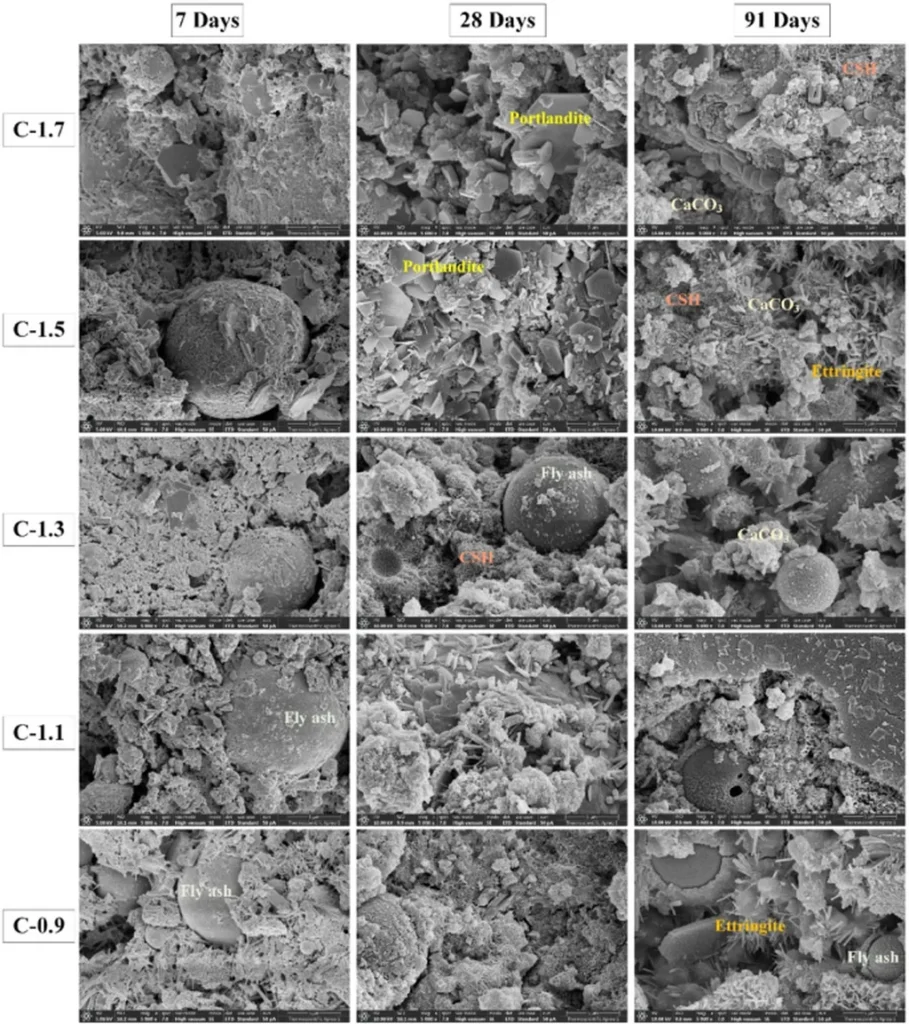
In the quest for sustainable construction materials, a recent study led by Panpan Tang from the University of Exeter’s Department of Engineering has shed light on the potential of calcium carbide residue (CCR)-based materials for soil stabilization, particularly in improving soft clay. Published in the journal ‘Developments in the Built Environment’ (which translates to ‘Advances in Construction and Urban Development’), the research offers promising insights for the energy sector and beyond.
The study, which involved wetting-drying cycle tests, tank leaching tests, and life cycle assessments, compared soils stabilized with CCR alone, CCR combined with fly ash (CCR-FA), and alkaline activated CCR-FA. The results were striking. While soils stabilized with CCR alone lost integrity after just two cycles, those treated with CCR-FA and activated CCR-FA gained strength over seven cycles. This durability is a significant factor for commercial applications, particularly in the energy sector where infrastructure often faces harsh environmental conditions.
“Our findings indicate that CCR-FA and activated CCR-FA not only enhance the strength of stabilized soils but also perform exceptionally well in terms of durability,” Tang explained. This durability is crucial for energy sector projects, where soil stabilization is often required for the construction of power plants, wind farms, and other infrastructure.
The study also addressed environmental concerns by evaluating the leachability of heavy metals. All CCR-based stabilized soils released low concentrations of heavy metals within regulatory limits. Notably, CCR-FA effectively reduced the mobility of Cu, Cr, and As, while activated CCR-FA performed better for Pb. This is a critical consideration for the energy sector, where environmental regulations are increasingly stringent.
Life cycle assessment (LCA) results further highlighted the environmental benefits of CCR-based materials. These materials showed lower environmental impacts compared to conventional binders, with CCR-FA emerging as the most sustainable option. However, the study noted that the environmental advantages of CCR and CCR-FA are strongly influenced by waste availability and energy sources. This underscores the need for careful consideration of local conditions and resources in the adoption of these materials.
The research suggests that CCR-based materials could play a significant role in eco-friendly soil stabilization, offering a sustainable alternative to traditional methods. For the energy sector, this could mean more cost-effective and environmentally friendly solutions for soil stabilization, ultimately contributing to the development of greener infrastructure.
As the construction industry continues to seek sustainable and durable materials, the findings of this study offer a compelling case for the use of CCR-based materials. The research not only advances our understanding of these materials but also paves the way for future developments in the field. With further research and commercialization, CCR-based materials could become a staple in the construction industry, particularly in the energy sector.