
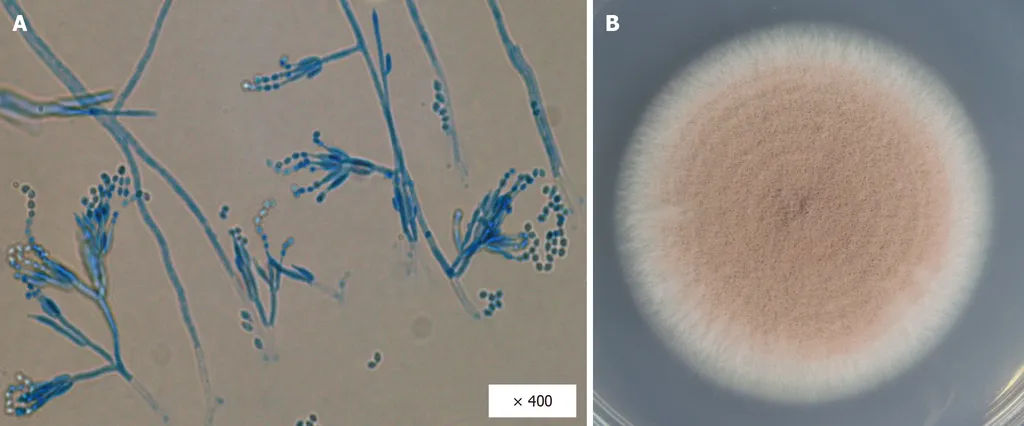
In the quest for sustainable and cost-effective solutions to environmental challenges, researchers are increasingly turning to nature’s own tools. A recent study published in the journal “Discover Materials” (which translates to “Discover Materials” in English) has unveiled a promising approach to removing toxic chromium (VI) ions from water using an unlikely ally: fungal biomass. The research, led by Gizachew Assefa Kerga from the Department of Chemical Engineering at Addis Ababa Science and Technology University, focuses on the underexplored fungal species Purpureocillium lilacinum, offering a novel perspective on biosorption technology.
Chromium (VI) is a highly toxic and carcinogenic heavy metal that poses significant environmental and health risks. Traditional methods of removing it from water can be expensive and energy-intensive. Biosorption, the process by which biological materials bind and concentrate heavy metals from aqueous solutions, presents a more sustainable alternative. However, most studies have focused on well-established fungal genera, leaving a gap in the exploration of less common species like P. lilacinum.
Kerga and his team set out to fill this gap, investigating the potential of P. lilacinum as a biosorbent for Cr(VI) removal. “We wanted to explore an underexplored species and see if it could offer advantages over more commonly studied fungi,” Kerga explains. The researchers found that P. lilacinum, when pre-treated with 0.5 N hydrochloric acid and oven-dried at 105°C, demonstrated an impressive Cr(VI) removal efficiency of up to 96.6%.
The study employed a combination of one-variable-at-a-time and Plackett-Burman statistical design approaches to optimize key biosorption parameters. The results revealed that initial Cr(VI) concentration was the most influential factor, followed by adsorbent dose, pH, and contact time. Mechanistic characterization using FTIR, SEM, and XRD provided molecular-level insights into the role of functional groups and surface morphology in chromium binding.
The implications of this research are significant for the energy sector, particularly in industries where chromium is a byproduct or contaminant. “This study not only establishes a novel and cost-effective biosorbent protocol but also provides a comprehensive mechanistic understanding and optimization,” Kerga notes. The findings lay a scientific foundation for the industrial application of P. lilacinum in chromium remediation, offering a sustainable and efficient solution to a pressing environmental challenge.
As the world continues to grapple with the consequences of industrialization, innovative solutions like this one are crucial. By harnessing the power of nature, researchers are paving the way for a cleaner, safer future. The study published in “Discover Materials” serves as a testament to the potential of underexplored fungal species in environmental remediation, opening new avenues for research and application in the field.