
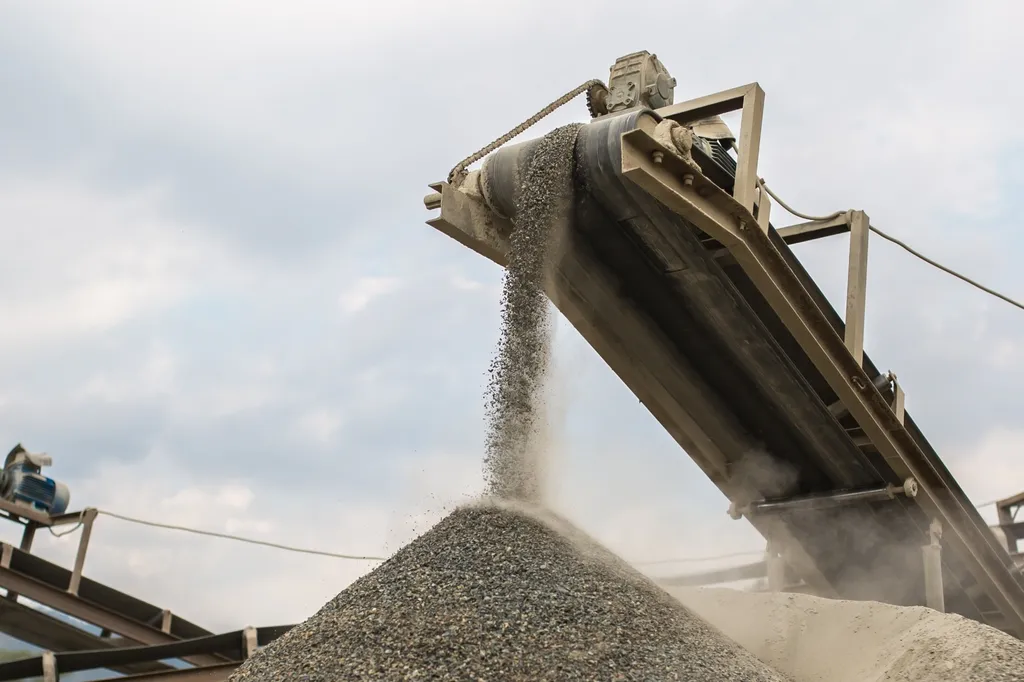
In the quest for sustainable construction materials, researchers have turned an industrial byproduct into a promising alternative for cement-based materials. A recent study led by Abiza Yaakoub from the University of Lyon, Ecole Centrale de Lyon – ENISE, has demonstrated the potential of aggregate washing fines (AWF), typically discarded as waste, to be transformed into a valuable pozzolanic material through a process called calcination.
The research, published in the journal ‘Developments in the Built Environment’ (which translates to ‘Advances in the Built Environment’), focuses on the valorization of AWF, which is rich in silica, alumina, and clay minerals like smectite, illite, and kaolinite. These properties make it a strong candidate for partial cement substitution in concrete formulations.
“By subjecting these fines to thermal activation at 750°C, we induce a change in their crystalline structure, transforming them into reactive amorphous phases,” Yaakoub explained. This process, known as calcination, not only reduces the specific surface area of the fines but also alters their particle size, enhancing their pozzolanic reactivity.
The study evaluated the pozzolanic activity of the calcined fines through mechanical tests, following stringent standards such as NF EN 450-1 and EN 196-1. The results were encouraging, particularly for cement substitution rates ranging from 10% to 20%. Compressive strength measurements and thermogravimetric analysis confirmed effective portlandite consumption in formulations containing the calcined fines, underscoring their reactivity.
The implications of this research are significant for the construction industry, particularly in the context of sustainability and circular economy. By recycling industrial waste and reducing the need for cement—a major contributor to carbon emissions—the study supports a more eco-friendly approach to concrete production.
“Our findings suggest that incorporating these calcined fines into concrete formulations can lead to a partial reduction in cement without significantly compromising mechanical performance,” Yaakoub noted. This could pave the way for more sustainable construction practices, aligning with global efforts to reduce the carbon footprint of the built environment.
The study’s results highlight the potential for industrial byproducts to be transformed into valuable resources, offering a dual benefit of waste reduction and enhanced material performance. As the construction industry continues to seek innovative solutions for sustainable development, this research provides a compelling example of how waste can be turned into a valuable asset.
The research not only advances our understanding of pozzolanic materials but also opens new avenues for the utilization of industrial residues in cement-based materials. As the world grapples with the challenges of climate change and resource depletion, such innovations are crucial for shaping a more sustainable future.