
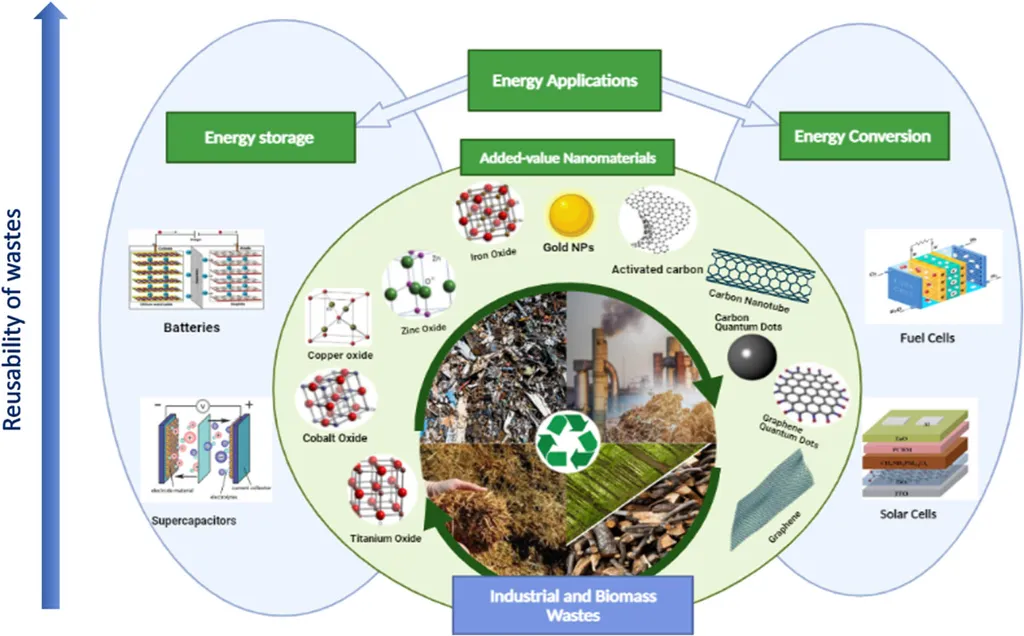
In a groundbreaking development for both the construction and energy sectors, researchers have discovered a novel method to transform an industrial byproduct into a valuable nanomaterial, offering promising applications in chemical sensing, bioimaging, and photocatalysis. The study, led by Muna E. Raypah from the Centre for Artificial Intelligence & Data Science at Universiti Malaysia Pahang Al-Sultan Abdullah, presents a sustainable solution for upcycling black liquor (BL), a high-volume waste product from the pulp and paper industry, into carbon dots (CDs) through a one-pot hydrothermal synthesis process.
Black liquor, typically burned for energy recovery, poses significant environmental disposal challenges. Raypah’s research, published in *Discover Materials* (which translates to *Kemunculan Bahan* in English), explores the potential of converting this waste into a resource. “By optimizing the concentration of black liquor in the synthesis process, we can tailor the properties of the resulting carbon dots for various high-value applications,” Raypah explains.
The team synthesized four samples of CDs using varying volumes of black liquor (5, 10, 15, and 20 mL), designated as BL-CDs1 through BL-CDs4. Optical analysis revealed strong UV absorption and blue fluorescence, with emission peaks ranging from 472 to 487 nm. X-ray photoelectron spectroscopy (XPS) confirmed improved carbonization and enhanced oxygen functionalities, particularly in the sample synthesized with 15 mL of black liquor (BL-CDs3).
Transmission electron microscopy (TEM) showed that BL-CDs3 exhibited a spherical to quasi-spherical morphology with an average diameter of 15.09 nm. Additionally, thermogravimetric analysis (TGA) demonstrated that BL-CDs3 had the highest thermal stability, with 17.4% residue at 998°C. “The enhanced properties of BL-CDs3 make it a strong candidate for applications in chemical sensing, bioimaging, and photocatalysis,” Raypah notes.
The commercial implications of this research are substantial. The construction industry, in particular, could benefit from the development of advanced materials with improved sensing and catalytic properties. For the energy sector, the ability to upcycle industrial waste into high-value nanomaterials presents an opportunity to reduce environmental impact while creating new revenue streams.
As the world increasingly focuses on sustainability and circular economy principles, this research offers a compelling example of how industrial waste can be transformed into valuable resources. “Our findings highlight the potential of black liquor as a precursor for carbon dots and open up new avenues for research in nanomaterial synthesis and applications,” Raypah concludes.
This innovative approach to waste upcycling could pave the way for future developments in the field, driving advancements in material science and contributing to a more sustainable industrial landscape. The study’s publication in *Discover Materials* underscores the significance of this research and its potential to shape the future of the construction and energy sectors.