
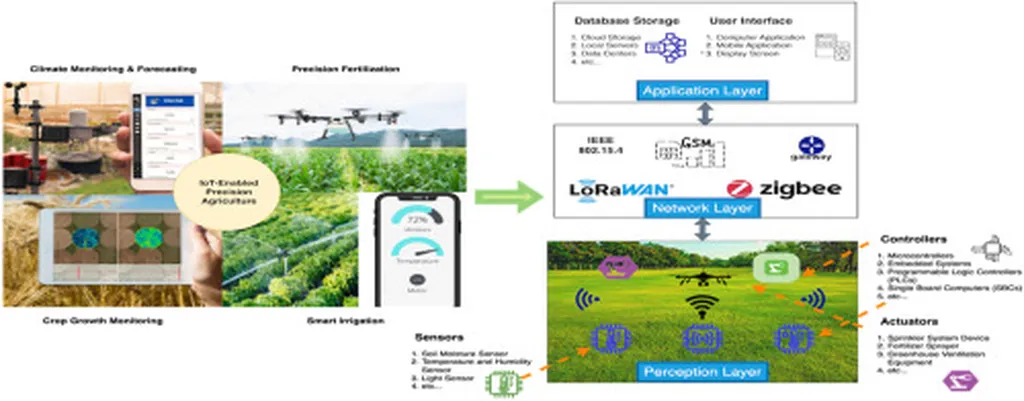
In the rapidly evolving world of digital agriculture, data is the new currency. As farms become smarter and more interconnected, the volume of data generated from various sources is growing exponentially. This data, when trusted and secure, can drive significant efficiencies and improvements in agricultural processes. However, ensuring the trustworthiness of this data is a complex challenge that researchers are now tackling head-on.
A recent study published in the EURASIP Journal on Wireless Communications and Networking, titled “Toward data trustworthiness in digital agriculture: taxonomy and building blocks,” delves into the critical aspects of data security in agriculture technology (AgTech). Led by Mir Ali Rezazadeh Baee from the School of Computer Science at Queensland University of Technology, the research proposes a comprehensive taxonomy to classify the technologies that form the backbone of AgTech and outlines the building blocks of data trustworthiness.
The study highlights the integration of various technologies such as big data, artificial intelligence, the Internet of Things (IoT), cloud and edge computing in AgTech. These technologies enable real-time data collection, transmission, storage, processing, and analysis, leading to more effective decision-making and automation of processes. However, the benefits of AgTech come with significant risks. Security flaws can disrupt farming equipment and processes, resulting in substantial revenue and capital losses.
“Data trustworthiness is essential for obtaining the benefits of AgTech,” Baee emphasizes. “Cyber resilience is required to identify and respond to cyber incidents effectively.”
The proposed taxonomy consists of seven main criteria that recognize the technologies and systems used to enable the movement of data at different stages. It considers how these technologies operate, their features, benefits, and limitations. Understanding this taxonomy is crucial for implementing anomaly detection and cryptographic methods to ensure data trustworthiness.
The research also explores the integration of post-quantum cryptography with AgTech, addressing the need for robust security measures in the face of evolving cyber threats. The usefulness of the proposed taxonomy is demonstrated through two case studies related to the design and implementation of a modular security framework in real-world scenarios.
The study identifies and discusses other important factors that impact data trustworthiness, providing a holistic view of the challenges and solutions in this domain. As the agriculture sector increasingly relies on digital technologies, ensuring the trustworthiness of data will be paramount for long-term sustainable smart farming and food security.
This research not only sheds light on the current state of data security in AgTech but also paves the way for future developments. By providing a clear taxonomy and outlining the building blocks of data trustworthiness, it offers a roadmap for researchers and practitioners to build more secure and resilient agricultural systems.
As the world moves towards smarter and more interconnected farming practices, the insights from this study will be invaluable in shaping the future of digital agriculture. The integration of post-quantum cryptography and the emphasis on anomaly detection and key management highlight the need for proactive measures to safeguard agricultural data.
In an era where data is king, ensuring its trustworthiness is the key to unlocking the full potential of AgTech. This research is a significant step towards achieving that goal, offering a comprehensive framework for securing the data that drives modern agriculture.