
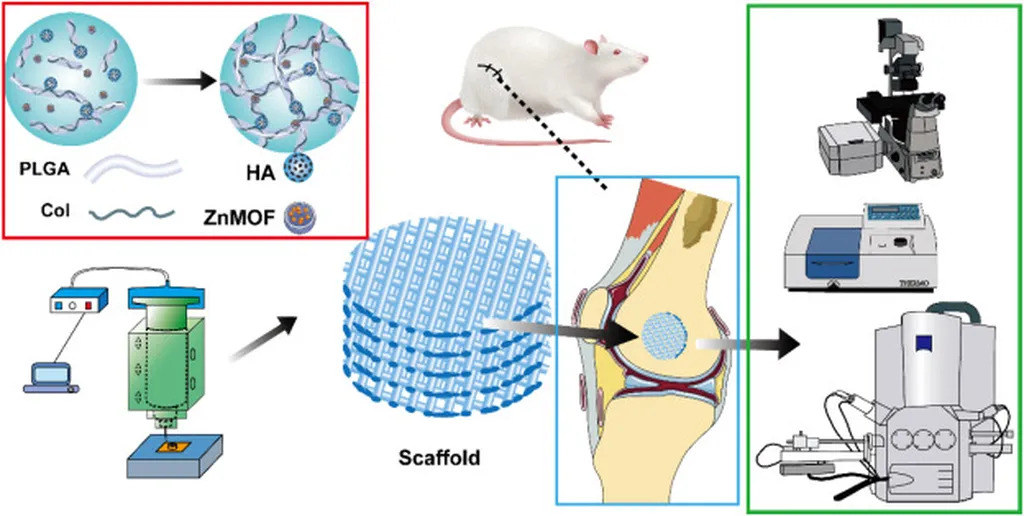
In a groundbreaking development poised to reshape the landscape of bone regeneration, researchers have unveiled a novel 3D-printed scaffold that harnesses the power of immunomodulation to accelerate healing. Led by Zhiyuan Zou of the Orthopedic Hospital at Nanchang University in China, the study published in the journal *Materials & Design* (which translates to *Materials & Design* in English) introduces a hybrid hydrogel scaffold that not only supports bone growth but also actively modulates the immune response to promote healing.
The scaffold, composed of methacrylated type-I collagen, methacrylated chitosan, and nano-hydroxyapatite, is no ordinary biomaterial. It is designed to encapsulate insulin-like growth factor-1 (IGF-1)-transfected bone marrow-derived mesenchymal stem cells (BMSCs), creating a dynamic environment that fosters bone regeneration. “This scaffold is not just a passive support structure; it actively participates in the healing process by creating an immunomodulatory microenvironment,” Zou explained.
The implications of this research are profound, particularly for the medical and biotechnology sectors. The ability to regulate immune responses and suppress inflammatory cytokines could revolutionize the treatment of bone defects, offering faster and more effective healing solutions. “By modulating the immune response, we can create an environment that is more conducive to bone growth and regeneration,” Zou added.
The study’s findings suggest that the scaffold’s synergistic effects—immunomodulation, inflammation suppression, and osteogenic differentiation—could significantly enhance the repair of bone defects. This breakthrough could lead to the development of advanced biomaterials that are not only structurally supportive but also biologically active, paving the way for innovative treatments in orthopedics and regenerative medicine.
As the field of tissue engineering continues to evolve, the integration of immunomodulatory bioactivity into biomaterials represents a significant leap forward. This research not only highlights the potential of 3D-printed scaffolds but also underscores the importance of understanding and leveraging the immune system’s role in tissue regeneration. With further development, these advanced biomaterials could become a cornerstone of modern medical treatments, offering new hope for patients suffering from bone injuries and defects.
In the broader context, this research could inspire similar innovations in other sectors, including the energy industry, where biomaterials with enhanced durability and self-healing properties could revolutionize infrastructure and component design. The potential applications are vast, and the future of biomaterial science looks brighter than ever.