
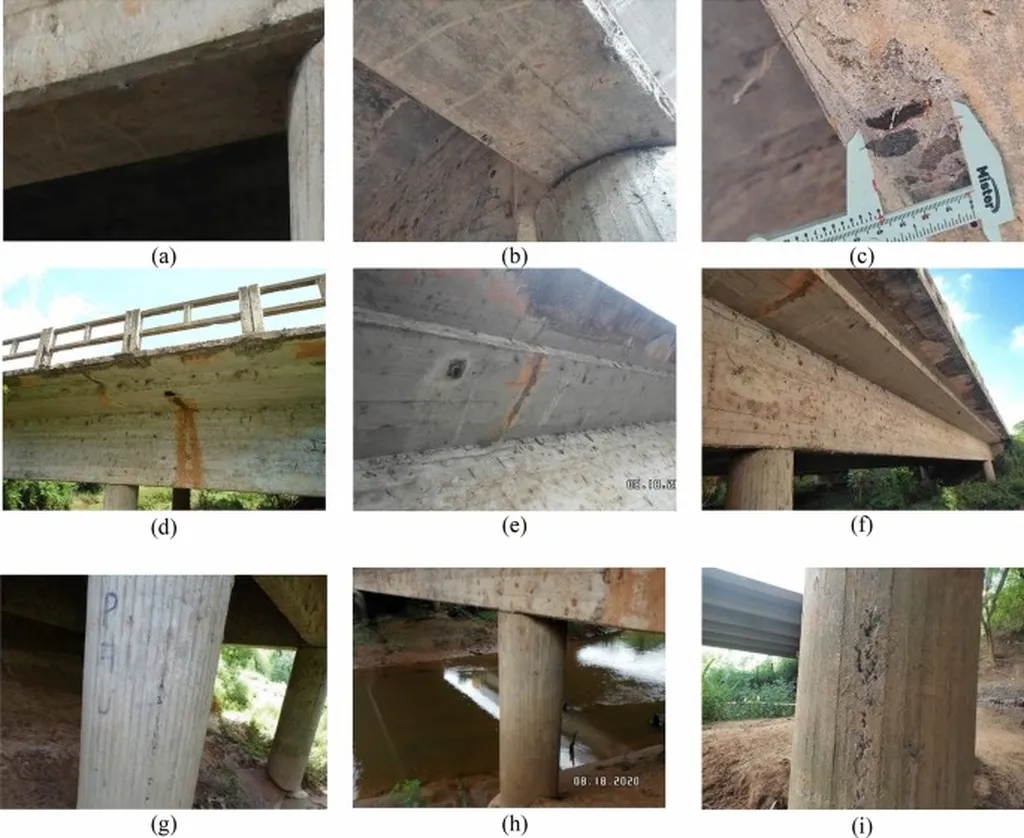
In the vast and intricate web of Brazil’s transportation infrastructure, bridges and viaducts stand as critical nodes, facilitating the movement of people and goods. Yet, these structures face an inevitable foe: time. As they age, deterioration sets in, posing challenges to their stability and functionality. A recent study, led by Clayton José Gomes Silva, a researcher affiliated with the Federal University of Pernambuco, has shed new light on the service life of these vital structures, offering insights that could reshape how we maintain and manage our highways.
The study, published in the Brazilian Journal of Structural and Materials Engineering (Revista IBRACON de Estruturas e Materiais), focused on 98 bridges and viaducts along federal highways in the state of Pernambuco. Silva and his team employed two methodologies: the Factor Method and Survival Analysis, both of which are gaining traction in the field of structural health monitoring.
The Factor Method, a deterministic approach, considers various factors such as material properties, environmental conditions, and design details to estimate the service life of a structure. On the other hand, Survival Analysis, a statistical method, uses historical data to predict the likelihood of a structure reaching a certain age without failure.
The results were telling. Silva noted, “We found that superstructures built using reinforced concrete exhibited a higher level of deterioration compared to those using prestressed concrete.” This finding is significant, as it could influence future design choices and maintenance strategies. The study also validated the reliability and consistency of both methodologies, paving the way for their wider adoption in assessing the service life of Special Engineering Structures (SES) on Brazilian highways.
The commercial implications for the energy sector are substantial. Highways, bridges, and viaducts are not just about transportation; they’re about connectivity, enabling the movement of energy resources and supporting the infrastructure that keeps our cities running. By better understanding and predicting the service life of these structures, we can plan more effectively, reducing downtime and maintenance costs.
Moreover, the study highlights the importance of regular inspections and comprehensive data collection. Silva emphasized, “There’s a need for a more systematic and regular inspection planning to gather accurate and reliable data.” This could drive demand for advanced inspection technologies and services, opening up new opportunities for businesses in the energy and infrastructure sectors.
As we look to the future, this research could shape the development of predictive maintenance strategies, AI-driven inspection systems, and even new materials and designs that extend the service life of our structures. It’s a reminder that in the world of infrastructure, standing still is not an option. We must continually evolve, adapt, and innovate to keep our highways—and our economy—moving.
In the words of Silva, “This study is just the beginning. There’s so much more we can do to improve the way we manage and maintain our infrastructure.” And with that, he invites us all to join him on this journey of discovery and innovation.