
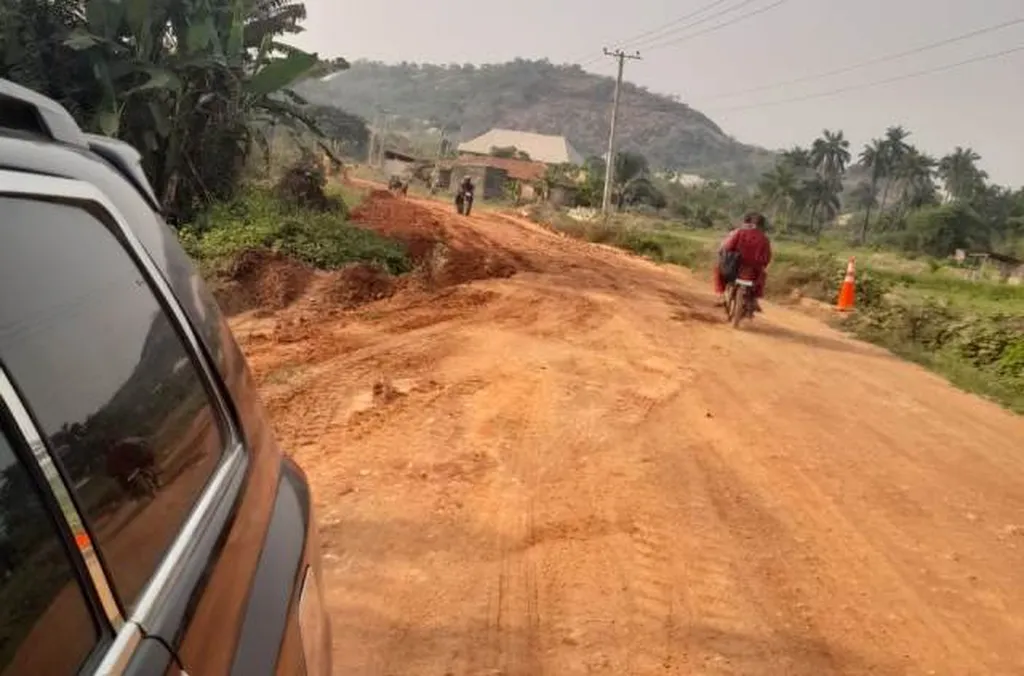
In the heart of Ado-Ekiti, Nigeria, a persistent problem has plagued the roads of Ekiti State University, causing recurring failures and disruptions. But now, a groundbreaking study led by Adams Ayomide Adeniyi from the Federal University Oye-Ekiti has shed new light on the subsurface conditions contributing to these issues, offering hope for more sustainable and effective road construction practices.
Using advanced geophysical methods, Adeniyi and his team employed electrical resistivity with a dipole-dipole configuration and two-dimensional (2D) electrical imaging to delve deep beneath the surface. “We wanted to understand the geological and geotechnical properties of the soil and rock that might be causing these recurring road failures,” Adeniyi explained. The data collected through Ohmega Resistivity Meter, electrodes, and connecting cables were processed using Dipro-Win software, revealing a detailed subsurface profile.
The results were striking. The researchers identified four distinct geological formations: topsoil with resistivity values ranging from 22 to 128 Ωm, a weathered layer (128 – 737 Ωm), a partly weathered basement (737 – 4232 Ωm), and fresh basement rock (>4232 Ωm). Crucially, they discovered weak zones with low resistivity, suspected to be clayey material, between stations 3 and 7, with a thickness of less than 2.5 meters. These zones were directly associated with road cracks and failures.
“This study highlights the importance of understanding subsurface conditions before embarking on any construction project,” Adeniyi noted. “By identifying these weak zones, we can recommend targeted solutions that address the root causes of road failures.”
The implications of this research extend far beyond the university campus. For the energy sector, understanding subsurface conditions is crucial for the construction of pipelines, power lines, and other infrastructure. “Geophysical techniques like electrical resistivity can be invaluable tools for identifying potential problem areas before they become costly issues,” Adeniyi said.
The study, published in the Engineering Heritage Journal (translated as “Heritage of Engineering”), demonstrates how geophysical techniques can be used to solve road infrastructure problems. It provides a blueprint for future developments in road engineering and maintenance projects, emphasizing the need for thorough subsurface characterization.
As the world continues to grapple with aging infrastructure and the challenges of climate change, Adeniyi’s research offers a timely reminder of the importance of innovative solutions. “By leveraging advanced geophysical methods, we can build more resilient and sustainable infrastructure that stands the test of time,” he concluded.
This research not only addresses immediate road challenges but also paves the way for future advancements in the field. As the energy sector continues to evolve, the insights gained from this study will be invaluable in shaping more effective and efficient construction practices.