
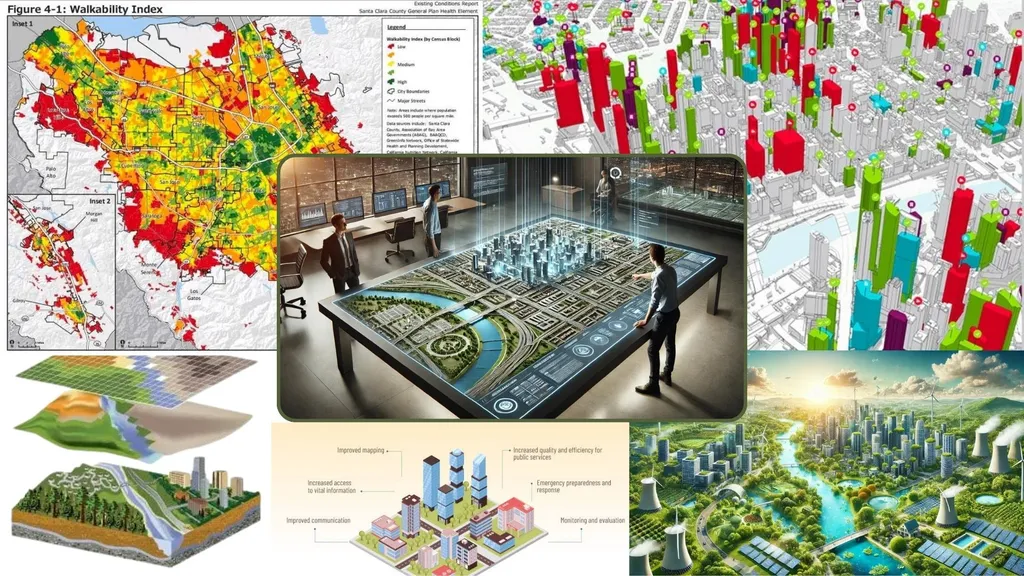
In the quest to decarbonize our cities and make them more sustainable, a powerful tool is emerging from an unexpected corner: Geographic Information Systems (GIS). Researchers, led by A. Koçyiğit from Istanbul Technical University’s Department of Geomatics Engineering, are exploring how GIS can revolutionize the planning and implementation of Positive Energy Districts (PEDs). These districts, which aim to produce more energy than they consume, are at the forefront of the energy transition, and GIS is proving to be an invaluable ally.
PEDs are not just a pipe dream; they are a reality being pursued through several EU-funded projects like MAKING-CITY, POCITYF, and CityxChange. These initiatives are working to deploy and replicate PEDs on a large scale, with the ultimate goal of enhancing energy efficiency and promoting environmental, social, and economic sustainability in urban areas. But how can GIS help in this complex task?
According to Koçyiğit, “GIS offers robust advantages in the management, analysis, and visualization of spatial data.” This is crucial for PED planning, as it allows for detailed and realistic analyses of solar potential, shading effects, and renewable energy capacity at both the building and district levels. The study highlights that 3D-GIS, in particular, enables more accurate evaluations, making it a game-changer for PED initiatives.
The commercial implications for the energy sector are significant. As cities around the world strive to meet their decarbonization targets, the demand for tools that can facilitate the planning and implementation of PEDs is set to grow. GIS, with its ability to provide detailed spatial data and analysis, is well-positioned to meet this demand.
Moreover, the integration of GIS in PED planning can enhance the feasibility and scalability of these projects, ultimately making them more attractive to investors. As Koçyiğit notes, “The findings indicate that the integration of GIS, particularly through 3D-based analyses, significantly enhances the decision-making processes associated with PED initiatives.”
This research, published in ‘The International Archives of the Photogrammetry, Remote Sensing and Spatial Information Sciences’ (translated to English as ‘The International Archives of the Photogrammetry, Remote Sensing and Spatial Information Sciences’), sheds light on the pivotal role that GIS can play in shaping the future of our cities. As we grapple with the challenges of climate change and urbanization, the insights from this study offer a promising path forward. The energy sector, in particular, stands to gain from the enhanced planning and decision-making capabilities that GIS brings to the table. As we look to the future, the integration of GIS in PED initiatives could well be a key driver in the transition to more sustainable and resilient cities.