
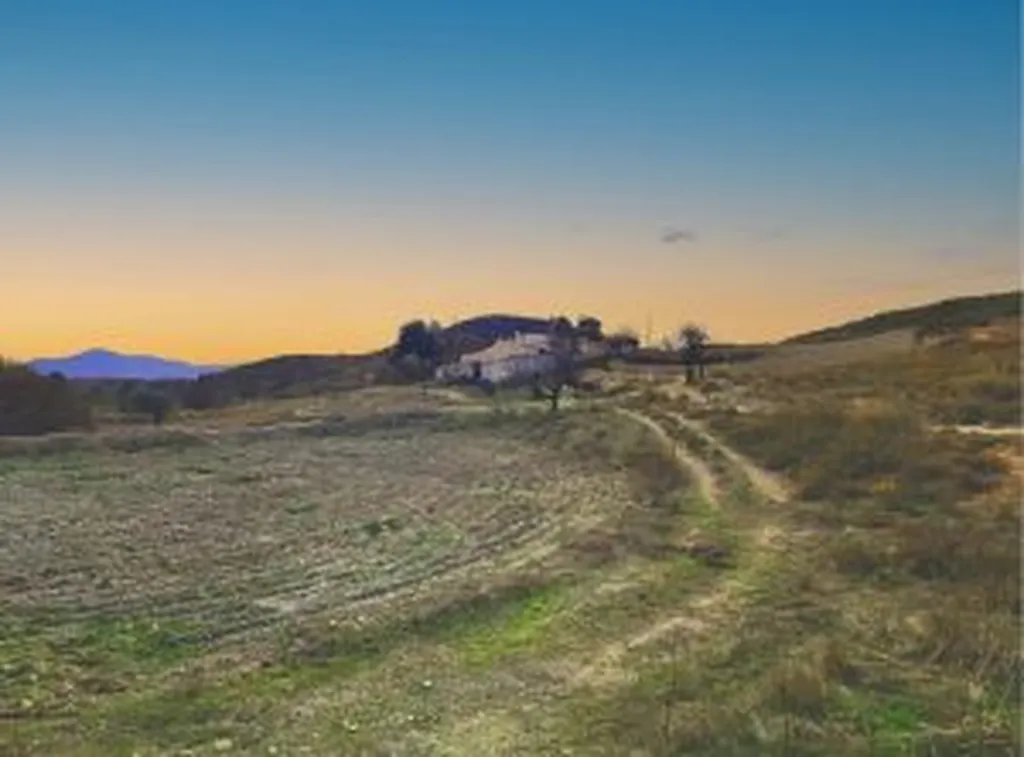
In the sun-scorched landscapes of Murcia, Spain, a groundbreaking approach to landscape restoration is taking root, and it’s not just about planting trees or reshaping terrain. Researchers, led by M. Gabriele from the Politecnico di Milano’s Department of Architecture, Built Environment and Construction Engineering, are harnessing the power of Virtual Reality (VR) to transform how we understand, communicate, and engage with restoration projects. Their work, published in the International Archives of the Photogrammetry, Remote Sensing and Spatial Information Sciences (a journal that might be more commonly known in English as the International Archives of Photogrammetry, Remote Sensing and Spatial Information Sciences), is paving the way for more effective, participatory, and education-ready strategies in landscape restoration.
Imagine stepping into a harsh, semi-arid environment, where the sun beats down and the terrain is rugged and inaccessible. Now, imagine being able to navigate this landscape from the comfort of a room, inspecting every swale, pond, and tree row with the wave of a hand. This is the power of immersive VR geovisualization, a technology that Gabriele and his team are leveraging to make complex ecological processes tangible and transferable.
The team’s innovative workflow begins with a UAV (Unmanned Aerial Vehicle) structure-from-motion survey, which produces a high-resolution textured model of the restoration site. This model is then geospatially situated using BlenderGIS, with ESRI imagery over a 30 m digital elevation model, and reconstructed in Twinmotion under a calibrated HDRI skydome. The result is a navigable, immersive VR environment that enables users to engage with the landscape on a personal, human scale.
“Our goal was to convert mesh into meaning,” Gabriele explains. “We wanted to create an experience that fosters spatial reasoning, knowledge transfer, and public communication.” To achieve this, the team engineered the VR environment for room-scale use, with teleport-only locomotion and a uniform down-scale that allows for hand-scale inspection of landscape features. Three access points organize short narrated sequences, guiding users from a broad landscape overview to near-field readings.
The pilot study, conducted on the Meta Quest 3, yielded promising results. Users reported high presence and perceived realism, low discomfort, positive self-reported competence, and a strong intent to re-engage with the VR environment. These findings suggest that immersive VR geovisualization has significant potential as a tool for public communication, education, and participatory decision-making in landscape restoration.
But the benefits of this technology extend beyond the environmental sector. In the energy industry, for instance, immersive VR geovisualization could revolutionize site selection, planning, and community engagement for renewable energy projects. By providing stakeholders with a tangible, navigable representation of a site, VR can foster a deeper understanding of the project’s impacts and benefits, facilitating more informed decision-making and more effective communication with local communities.
Moreover, the team’s reproducible workflow, which combines geospatial context and proxemic design, offers a strategic path toward a participatory, education-ready XR (extended reality) tool for regenerative practice. This could have significant implications for the energy sector, where the ability to engage stakeholders, foster understanding, and build support for projects is crucial.
As Gabriele and his team continue to refine their approach, the potential applications of immersive VR geovisualization in landscape restoration—and beyond—are vast. By making complex processes tangible and transferable, this technology has the power to shape the future of participatory, education-ready, and stakeholder-driven decision-making in a wide range of fields.
In the words of Gabriele, “This is not just about creating a pretty picture. It’s about fostering a deeper understanding of our environment, empowering people to engage with complex issues, and ultimately, driving more effective, informed, and participatory decision-making.” And in the energy sector, as in environmental conservation, that’s a goal worth pursuing.