
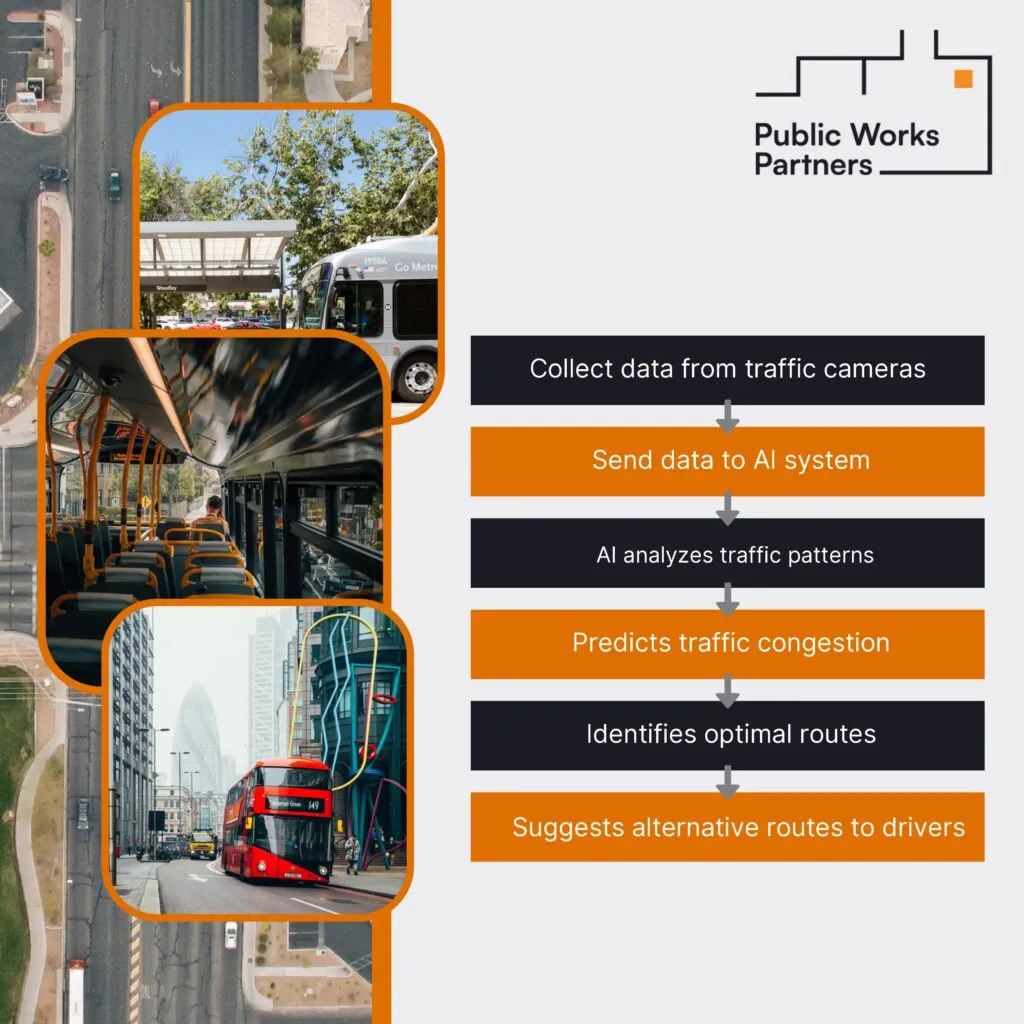
In the bustling world of highway construction, managing traffic flow is a complex puzzle that has just been approached with a new, high-tech solution. Researchers, led by Xiaomin Dai from the School of Transportation Engineering, have developed an innovative framework that combines automated machine learning (AutoML) and explainable artificial intelligence to predict and manage traffic delays in highway work zones. This breakthrough, published in the *Journal of Advanced Transportation* (which translates to *Journal of Advanced Transportation* in English), could significantly impact the energy sector by optimizing traffic flow and reducing delays, ultimately saving time and resources.
The study focuses on the challenges posed by large-scale highway reconstruction and expansion projects, particularly in areas with limited diversion capacities and high freight truck ratios. “The increasing scale of these projects has intensified traffic management challenges,” Dai explains. “Our goal was to create a tool that could help manage these challenges more effectively.”
The research team used the VISSIM microsimulation to model traffic flow dynamics under high truck proportions, generating 1,320 parameterized scenarios. They then leveraged the AutoGluon AutoML framework to develop an ensemble delay prediction model. The results were impressive, with the CatBoost_BAG_L1 model achieving optimal accuracy with a significant improvement in computational speed.
One of the most compelling aspects of this research is its use of SHapley Additive exPlanations (SHAP) interpretability analysis. This tool decodes the multifactorial coupling mechanisms influencing traffic organization, providing valuable insights for decision-makers. “SHAP helped us understand the nonlinear dynamics of traffic flow,” Dai notes. “For instance, we found that traffic volume becomes a dominant delay contributor beyond 1,400 vehicles per hour.”
The implications for the energy sector are substantial. By optimizing traffic flow and reducing delays, this framework can help minimize fuel consumption and emissions, contributing to more sustainable and efficient transportation networks. Moreover, the ability to predict and manage delays can enhance the safety and efficiency of highway work zones, benefiting both construction crews and motorists.
Looking ahead, this research could shape future developments in intelligent traffic management systems. As Dai puts it, “Our methodology advances intelligent decision-making for dynamic lane control and truck scheduling optimization. It’s a step towards smarter, safer, and more efficient highways.”
In an era where technology is transforming every aspect of our lives, this research stands out as a testament to the power of innovation in solving real-world problems. As highways continue to be the lifelines of our economy, tools like this will be crucial in ensuring their smooth and efficient operation.