
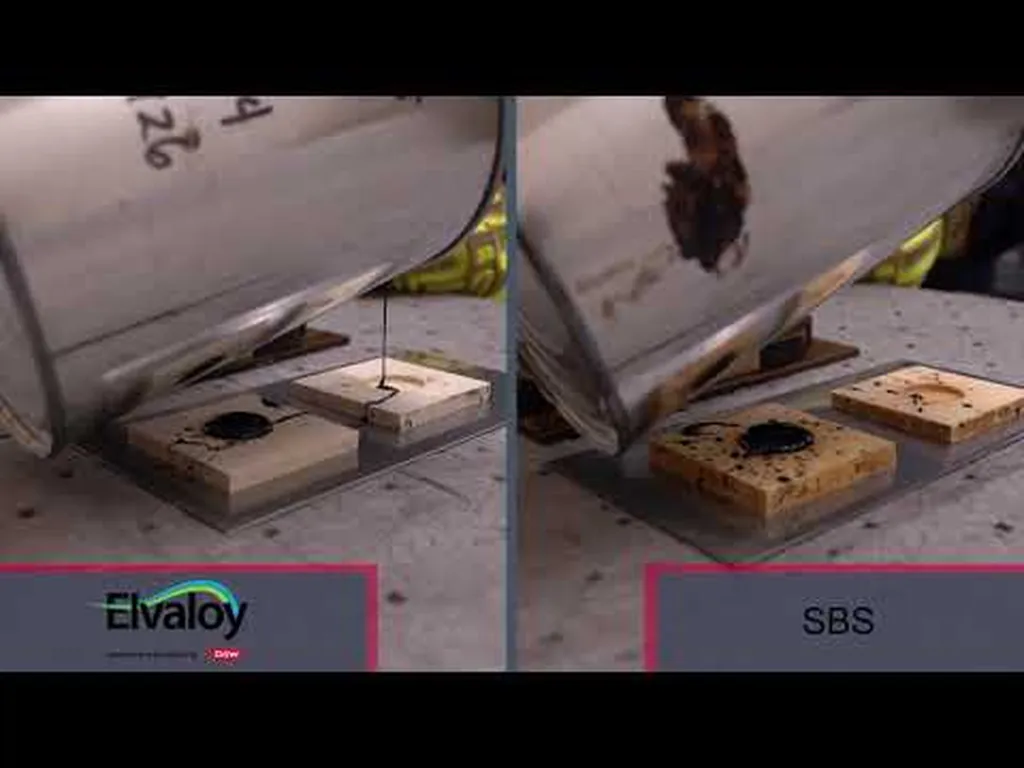
In the ever-evolving world of road construction, the quest for durable and resilient pavements has led to significant advancements in bitumen modification technologies. A recent study published in the Journal of Innovative Transportation, titled “Comparison of Elvaloy and Styrene-Butadiene-Styrene Added Polymer Modified Bitumen,” sheds light on the performance of two popular polymer modifiers used to enhance bituminous binders. The research, led by Murat Vergi Taciroğlu from Mersin University, offers valuable insights into the commercial impacts for the energy sector and the future of pavement construction.
The study focused on comparing Elvaloy and Styrene-Butadiene-Styrene (SBS) as additives to improve the properties of B50/70 grade pure bitumens. Taciroğlu and his team conducted a series of tests, including penetration, softening point, elastic recovery, flash point, storage stability, dynamic shear rheometer, beam bending rheometer, rotational thin film oven, and pressure aging vessel tests, to evaluate the performance of the modified binders.
One of the key findings of the study was the determination of optimum additive rates for both modifiers. “The results of our tests showed that the additive rates for both Elvaloy and SBS are within the optimum values as per the specifications,” stated Taciroğlu. This finding is crucial for the energy sector, as it provides a clear guideline for manufacturers and contractors to achieve the best performance from their modified bitumen products.
The study also highlighted the importance of homogeneous dispersion during mixing, particularly for SBS-modified binders. The storage stability tests revealed that non-homogeneous dispersion significantly affects the behavior of the binder after storage. This insight could lead to improvements in mixing processes and quality control measures, ultimately enhancing the durability and performance of road pavements.
The commercial implications of this research are substantial. As the demand for high-performance road pavements continues to grow, the energy sector must adapt to meet these evolving needs. The findings of this study provide a roadmap for manufacturers and contractors to optimize their use of polymer modifiers, ensuring the production of high-quality, durable pavements that can withstand increased traffic volume and harsh environmental conditions.
Looking ahead, this research could shape future developments in the field of polymer-modified bitumen. As Taciroğlu noted, “Our study provides a foundation for further research into the optimization of polymer modifiers and the development of new, innovative solutions for road construction.” This could lead to the creation of more advanced and sustainable pavement materials, ultimately benefiting the energy sector and the broader construction industry.
In conclusion, the study published in the Journal of Innovative Transportation (translated as “Journal of Innovative Transportation”) offers valuable insights into the performance of Elvaloy and SBS as polymer modifiers for bituminous binders. The findings have significant commercial implications for the energy sector and pave the way for future advancements in the field of road construction. As the industry continues to evolve, research of this nature will be instrumental in driving innovation and improving the quality and durability of road pavements.