
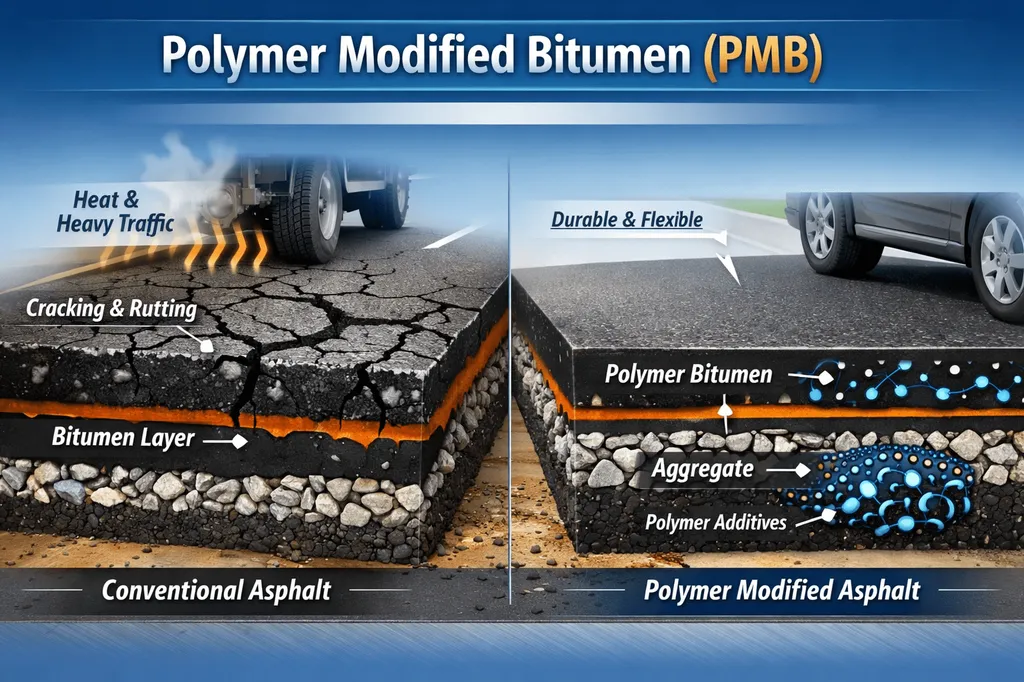
In the ever-evolving world of transportation infrastructure, researchers are constantly seeking innovative ways to enhance the performance of bitumen, a critical component in pavement construction. A recent study published in the *Journal of Innovative Transportation* (translated from Turkish as *Journal of Innovative Transportation*) has shed light on an unexpected yet promising avenue for bitumen modification: boric acid.
Emre Uyar, a researcher from Afyon Kocatepe University, led the investigation into the effects of boric acid—a by-product of boron—on the rheological and chemical properties of bitumen. The study, which focused on varying concentrations of boric acid (0.05%, 0.10%, and 0.15% by weight), utilized Dynamic Shear Rheometer (DSR) and Fourier Transform Infrared Spectroscopy (FT-IR) to assess the modifications.
The findings were intriguing. According to Uyar, “The DSR results demonstrated that boric acid significantly enhanced the viscoelastic performance of bitumen.” This improvement in rheological properties suggests that boric acid could be a viable additive for enhancing the durability and performance of bitumen in pavement applications.
But the benefits didn’t stop at rheological improvements. FT-IR analysis revealed notable changes in the chemical structure of the modified bitumen samples, indicating potential interactions between boric acid and the bitumen matrix. “These chemical changes suggest that boric acid might be forming new bonds or altering the existing ones within the bitumen, which could contribute to its enhanced performance,” Uyar explained.
The implications of this research are substantial for the energy and transportation sectors. As the demand for more durable and sustainable infrastructure grows, the development of cost-effective and environmentally friendly additives like boric acid could revolutionize the way bitumen is used in pavement construction.
Moreover, the use of boric acid—a by-product of boron—could also address environmental concerns by providing a sustainable solution for waste management in the boron industry. This dual benefit makes the research particularly compelling for industries looking to balance performance with sustainability.
As the transportation sector continues to evolve, the integration of innovative materials like boric acid-modified bitumen could pave the way for more resilient and long-lasting infrastructure. The study by Emre Uyar and his team not only highlights the potential of boric acid as a bitumen modifier but also opens up new avenues for research in this field.
For professionals in the energy and transportation sectors, this research offers a glimpse into the future of pavement construction, where sustainability and performance go hand in hand. As Uyar aptly puts it, “This is just the beginning. The potential applications and benefits of boric acid in bitumen modification are vast, and we are excited to explore them further.”