
In the world of biological research, cell culture is a cornerstone technique, but it’s not without its challenges. Microbial contamination can wreak havoc on experiments, leading to unreliable data and wasted resources. Traditional methods of preventing contamination, like using antibiotics, can interfere with cellular processes, potentially skewing results. Now, a team of researchers led by Juan Wang from the State Key Laboratory of Refractories and Metallurgy at Wuhan University of Science and Technology in China, has developed a promising solution to this age-old problem.
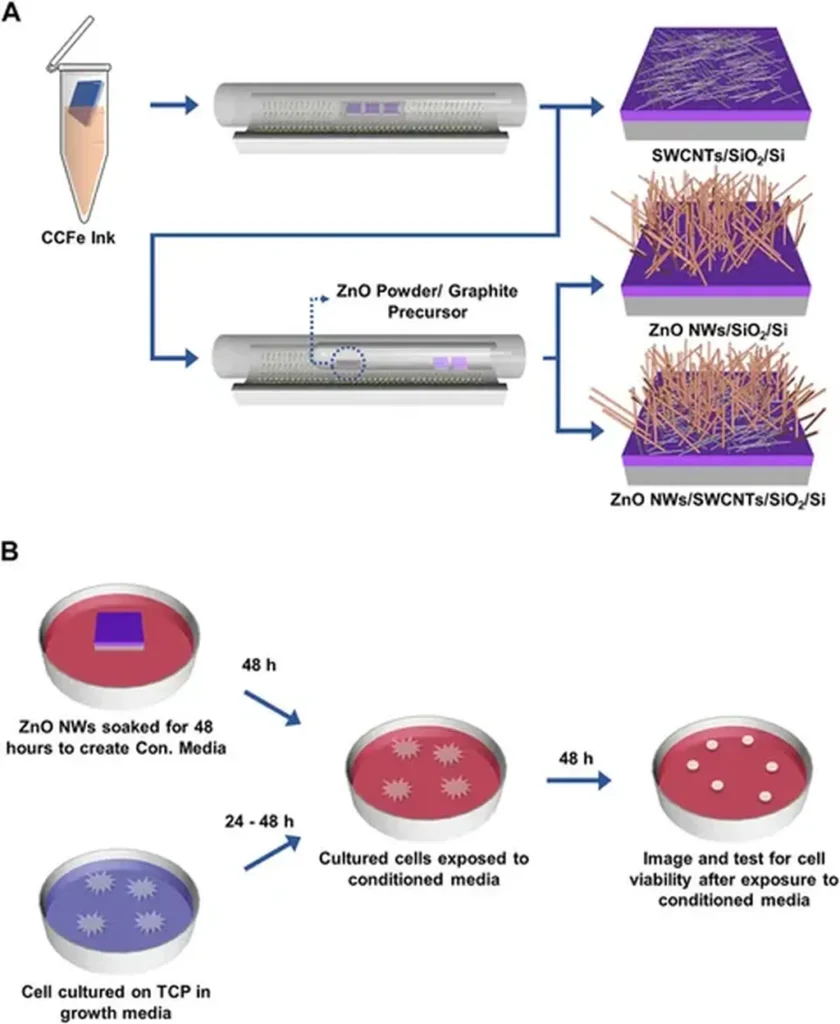
Published in the journal *Nano Select* (translated to English as “Nano Selection”), the study introduces an innovative approach to cell culture: antimicrobial nano-ZnO nanocoatings. These coatings, applied to the surface of cell culture dishes using a technique called atomic layer deposition (ALD), create a robust, adhesive layer that’s both antimicrobial and biocompatible.
The team, led by Wang, synthesized zinc oxide (ZnO) nanocoatings on indium tin oxide (ITO) glass, resulting in a smooth surface with a simple composition. The coatings demonstrated potent antimicrobial activity, achieving a bacterial lethality rate of 98.3% under visible light within just 30 minutes. “The antimicrobial activity of these ZnO nanofilms is remarkable,” Wang noted, highlighting the efficiency of the coatings in combating contamination.
But the benefits don’t stop at antimicrobial activity. The ZnO nanocoatings also proved to be biocompatible, sustaining cell proliferation rates over three successive passages without altering the cytoskeletal architecture of HeLa cells. This means that the cells can grow and divide normally, unaffected by the presence of the ZnO coatings. “The biocompatibility of these coatings is crucial,” Wang explained, “as it ensures that the cells can grow and function as they normally would, without any interference from the antimicrobial properties of the ZnO.”
Moreover, the ZnO nanocoatings retained their properties even after five successive generations of cell culture, leading to a significant reduction in plastic waste compared to conventional Petri dishes. This not only makes the process more environmentally friendly but also reduces the cost of materials for researchers.
The implications of this research are far-reaching, particularly in the energy sector. Cell culture is used extensively in energy research, from studying microbial fuel cells to developing biofuels. By reducing contamination and eliminating the need for antibiotics, these ZnO nanocoatings could lead to more reliable and repeatable research data, ultimately accelerating advancements in the field.
Furthermore, the reduction in plastic waste could have a significant impact on the environment. As the world becomes increasingly aware of the need for sustainability, the energy sector is under pressure to reduce its environmental footprint. By adopting these ZnO nanocoatings, researchers could contribute to this effort, making their work not only more efficient but also more eco-friendly.
This research opens up new possibilities for the future of cell culture. As Wang and her team continue to explore the potential of these nanocoatings, they could pave the way for a new era of biological research, one that is more reliable, more efficient, and more sustainable. The journey has just begun, but the potential is immense, and the impact could be profound.