
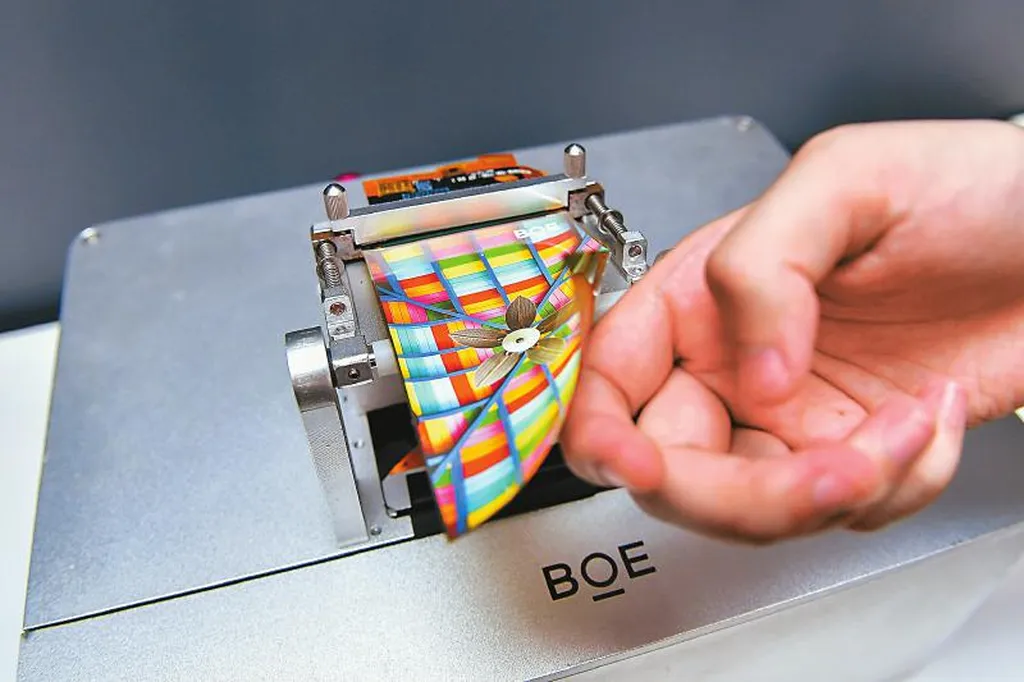
In a groundbreaking development poised to revolutionize the energy sector, researchers have unveiled a novel approach to designing flexible electronic devices with unprecedented efficiency and durability. The study, led by Zhanhai Li from the School of Energy and Power Engineering at Gansu Minzu Normal University, focuses on the application of monolayer B4Cl4 in 5.0 nm node flexible metal oxide semiconductor field-effect transistors (MOSFETs). This research, published in the *Journal of Science: Advanced Materials and Devices* (translated as *Journal of Science: Advanced Materials and Devices*), promises to address critical bottlenecks in the design of flexible electronic devices, offering significant implications for the energy sector.
Flexible electronic devices are increasingly sought after for their ability to maintain stable electrical performance under complex deformations, making them ideal for cutting-edge nanoscale electronic systems. However, achieving high bending tolerance and low power consumption has remained a persistent challenge. Li and his team systematically investigated the crystal structure, dynamic stability, intrinsic electronic properties, and quantum transport behavior of monolayer B4Cl4, combining density functional theory and non-equilibrium Green’s function methods.
The results are nothing short of remarkable. The n-type MOSFETs with transport along the x-direction (x,nMOSFETs) demonstrated the ability to meet the core specifications of the international semiconductor technology roadmap (ITRS) for both high-performance (HP) and low-power (LP) devices by 2028. “The non-conformally bent dual-gate (DG) x,nMOSFET exhibits excellent bending tolerance, with its maximum on-state current exceeding 98.94% (43.44%) of the ITRS HP (LP) standards,” Li explained. This level of performance is a significant leap forward, offering a robust solution for flexible electronic devices that can withstand extreme conditions.
Moreover, the subthreshold swing of these devices approaches the 60 mV/dec thermodynamic limit across the entire bending range, and the power-delay product (PDP) of the LP device is merely half of the ITRS benchmark. For conformally bent DG x,nMOSFETs, the benefits are even more pronounced, with reduced gate capacitance, intrinsic delay time, and PDP under the same bending amplitude. “This opens up a new direction for LP device integration,” Li noted, highlighting the potential for further advancements in the field.
The implications for the energy sector are profound. Flexible electronic devices with such high performance and durability can be integrated into a wide range of applications, from wearable technology to advanced energy storage systems. The ability to maintain stable electrical performance under deformation makes these devices ideal for use in harsh environments, such as in renewable energy systems where flexibility and resilience are crucial.
This research not only verifies the unique application advantages of monolayer B4Cl4 in 5 nm node flexible HP/LP nanoelectronic devices but also lays a crucial theoretical foundation for the precise construction of 2D material-based LP flexible devices. It offers insights into a device design paradigm featuring collaborative optimization of multi-structure and multi-bending-mode configurations, paving the way for future developments in the field.
As the energy sector continues to evolve, the demand for flexible, efficient, and durable electronic devices will only grow. This research represents a significant step forward in meeting that demand, offering a glimpse into a future where flexible electronics play a pivotal role in shaping the energy landscape. With the publication of these findings in the *Journal of Science: Advanced Materials and Devices*, the stage is set for further innovation and exploration in this exciting field.