
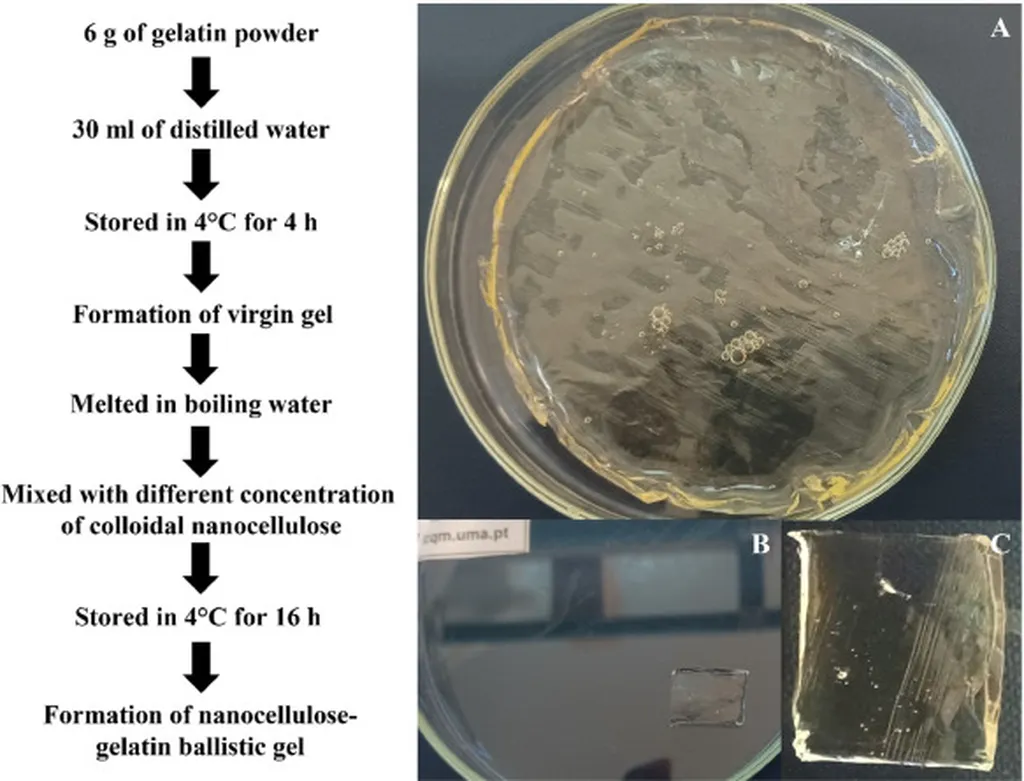
In the world of ballistics research, a significant shift is on the horizon, one that could reshape how we understand ammunition lethality and wound ballistics. Traditionally, ballistic gelatine has been the gold standard for simulating human tissue, but a new study published in *Nano Select* (translated to *Nano Choice*) is challenging this norm, offering a more sustainable and ethical alternative.
James Read, a researcher at the Cranfield Forensic Institute, Cranfield University, and part of the Defence Academy of the United Kingdom, has been at the forefront of this investigation. His team has been exploring the use of foodstuffs gelatine, both porcine and vegan, as potential replacements for traditional ballistic gelatine. The goal? To reduce environmental impact and ethical concerns while maintaining, or even improving, performance.
The study, titled “Predicting Penetration Performance in Current and Novel Sustainable Tissue Simulants Using Quasi‐Static Compression Data,” delves into the differences in performance, repeatability, and manufacturing considerations between these alternatives and the industry standard. The findings are promising. “We found that both porcine and vegan alternatives can provide increased performance, transparency, and repeatability at a lower strain rate when using 10% ballistic gelatine as the control,” Read explains.
This is a significant discovery, as it suggests that researchers can achieve comparable results using these alternative materials, but at a lower strain rate. However, the study also highlights a crucial caveat. Dynamic testing revealed no correlation between datasets generated from quasi-static and dynamic research programs, indicating significant differences in global and local responses to impact.
So, what does this mean for the future of ballistics research and the energy sector? The potential is substantial. By adopting these sustainable alternatives, research programs could see economic benefits, reduced environmental impact, and a move away from single-source suppliers. This could lead to more diverse and resilient supply chains, which is a boon for any industry, including energy.
Moreover, the findings could pave the way for more ethical and environmentally friendly practices in ballistics research. As Read puts it, “Vegan alternatives were identified as suitable candidates to reduce the ethical and environmental issues associated with traditional gelatine manufacture.”
In conclusion, this research is a stepping stone towards a more sustainable and ethical future in ballistics research. It’s a testament to the power of innovation and the potential of alternative materials to drive change. As the energy sector continues to evolve, so too will the tools and methods we use to understand and advance it. This study is a reminder that progress is not just about pushing boundaries, but also about redefining them in a way that benefits us all.