
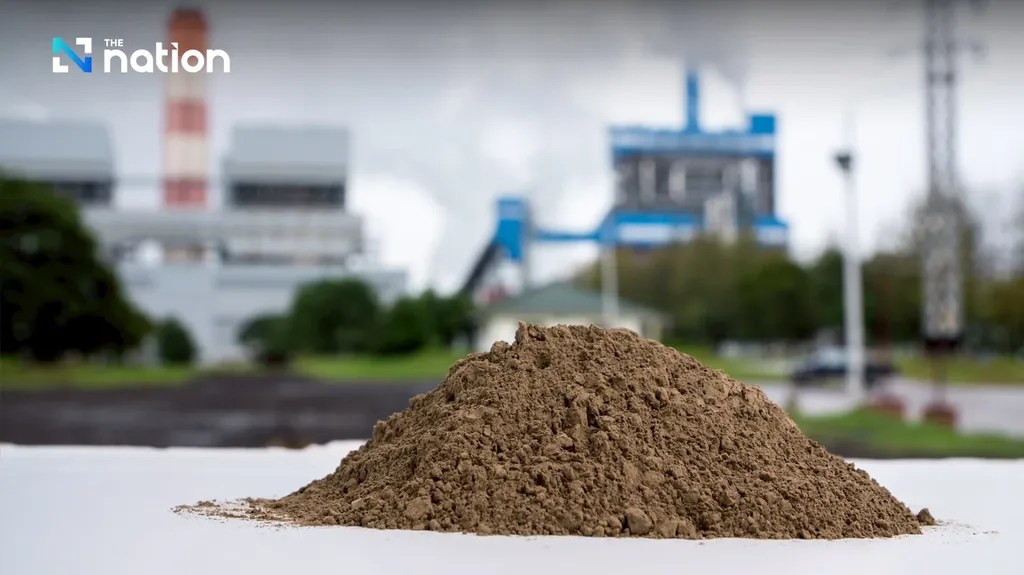
In the quest for sustainable construction materials, a groundbreaking study led by Menglim Hoy from Suranaree University of Technology in Thailand has unveiled promising insights into the utilization of Refuse-Derived Fuel (RDF) fly ash in pavement construction. Published in the journal *Case Studies in Construction Materials* (translated as *Case Studies in Building Materials*), this research could significantly impact the energy and construction sectors by offering a sustainable solution for waste management and infrastructure development.
The study focuses on the potential of RDF fly ash, a byproduct of municipal solid waste incineration, as a supplementary cementitious material in cement-stabilized lateritic soil for pavement bases. Hoy and his team conducted a systematic comparison of two implementation strategies: partial cement replacement and supplementary addition. The results revealed distinct performance characteristics, with the addition approach showing progressive strength enhancement.
“Our findings indicate that RDF fly ash can effectively function as a supplementary cementitious material when adequate primary cement is maintained,” said Hoy. The addition method achieved a 28-day unconfined compressive strength (UCS) of 2.71 MPa and an indirect tensile strength (ITS) of 0.29 MPa at 30% RDF fly ash, exceeding the control values. In contrast, the replacement approach showed a strength reduction, highlighting the importance of the implementation strategy.
The research also demonstrated a strong linear correlation between 7-day and 28-day UCS, enabling accelerated quality assessment. Microstructural analysis revealed that the addition method led to dense C-S-H networks and refined pore structure, while the replacement method showed progressive porosity increase and depleted cementitious phases. Environmental safety was confirmed through Toxicity Characteristic Leaching Procedure (TCLP) testing, with all heavy metals below detection limits.
This study not only advances sustainable waste valorization but also offers a cost-effective solution for the construction industry. By utilizing RDF fly ash, construction companies can reduce their environmental footprint while maintaining the structural integrity of pavement bases. The energy sector can also benefit from this research by finding new applications for waste byproducts, thereby promoting a circular economy.
As the construction industry continues to seek sustainable and innovative materials, this research paves the way for future developments in pavement geotechnics. The findings could lead to the adoption of RDF fly ash in large-scale infrastructure projects, contributing to a more sustainable and environmentally friendly construction industry. With the growing emphasis on sustainability and waste reduction, this study offers a timely and impactful solution for both the energy and construction sectors.