
In the heart of China’s industrial northeast, researchers are tackling one of the world’s most pressing challenges: water security. Xin Liang, a materials scientist at Shenyang University of Technology, is leading the charge, exploring innovative materials that could revolutionize wastewater treatment and, by extension, the energy sector.
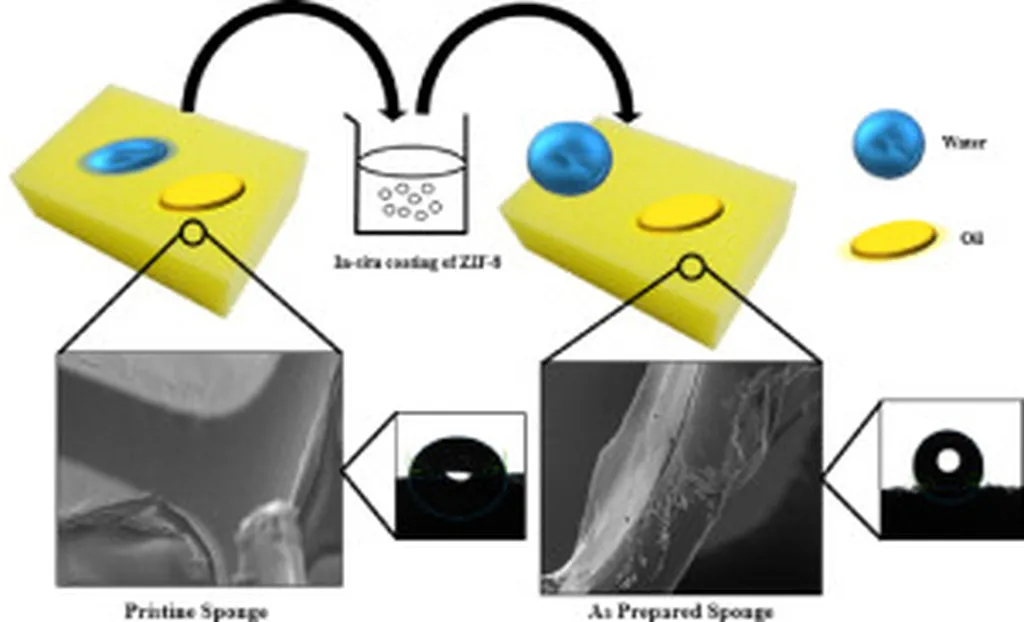
Liang and her team are focusing on a class of materials called metal-organic frameworks (MOFs), which are highly porous and can be tailored to capture specific pollutants. By incorporating magnetic nanoparticles of Fe3O4, they’ve created a material that’s not only highly effective at removing contaminants but also easily recoverable. “The combination of MOFs with magnetic nanoparticles opens up new possibilities for wastewater treatment,” Liang explains. “It’s like having a super-absorbent sponge that you can pull out of the water with a magnet.”
The team’s research, published in the Journal of Physics: Materials (JPhys Materials), delves into various synthesis techniques and surface functionalization strategies to enhance the performance of these materials. They’ve explored everything from metal ion doping to composite materials, each method offering unique advantages for different types of pollutants.
The potential commercial impacts are significant. In the energy sector, for instance, these materials could be used to treat wastewater from fracking sites, removing harmful chemicals and making the water safe for reuse. This could not only reduce the environmental impact of energy production but also lower costs by minimizing water consumption.
Moreover, the materials could be used to remove heavy metals and organic pollutants from industrial wastewater, making them invaluable for manufacturers looking to minimize their environmental footprint. “The versatility of these materials is one of their most exciting aspects,” Liang says. “They can be tailored to suit a wide range of applications.”
Looking ahead, Liang predicts that these materials could play a crucial role in addressing global water challenges. “As the world’s population grows and climate change intensifies, the demand for clean water will only increase,” she says. “Materials like these could be a key part of the solution.”
Indeed, Liang’s research offers a glimpse into a future where advanced materials play a pivotal role in sustainable development. By pushing the boundaries of what’s possible, she and her team are paving the way for more efficient, sustainable water purification technologies. And in doing so, they’re not just shaping the future of wastewater treatment—they’re shaping the future of our planet.