
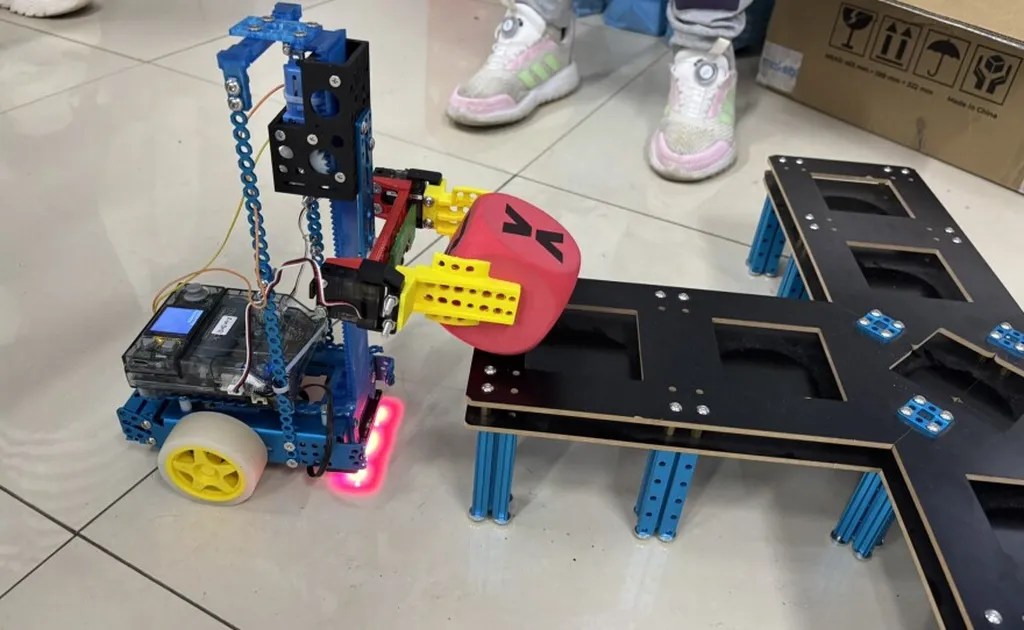
In the realm of precision engineering, servo actuators are the unsung heroes, powering everything from aerospace systems to advanced robotics. Yet, their performance is often hampered by nonlinear factors like friction, backlash, and transmission errors. Traditional modeling methods, though useful, have struggled to keep pace with the growing demand for accuracy in dynamic control systems. Enter B. Li, a researcher from the College of Advanced Interdisciplinary Studies at the National University of Defense Technology in China, who has developed a groundbreaking data-driven modeling method that could revolutionize the field.
Li’s innovative approach, published in the journal *Mechanical Sciences* (translated from Chinese as *机械科学*), leverages the power of artificial intelligence and advanced mathematical techniques to create more accurate models of servo actuators. “Traditional methods rely on simplified analytical models, which often fall short in capturing the complex nonlinear behaviors of servo systems,” Li explains. “Our data-driven method employs a back propagation (BP) neural network to perform nonlinear regression analysis, significantly improving the accuracy of our models.”
The research demonstrates that Li’s data-driven model achieves a goodness of fit exceeding 0.92 with the actual system, an average improvement of over 7% compared to traditional models. This enhanced accuracy allows for a more precise understanding of various dynamic behaviors, including velocity fluctuations caused by transmission errors, velocity dead zones induced by friction, dynamic backlash variations under load, and uneven friction torque at the same velocity.
The implications of this research are far-reaching, particularly for industries that rely heavily on precision engineering, such as aerospace, manufacturing, and robotics. In the energy sector, for instance, more accurate servo actuator models could lead to improved performance and efficiency in wind turbines, solar tracking systems, and other renewable energy technologies. “Accurate modeling is the foundation of effective control,” Li notes. “By providing a more precise understanding of servo system dynamics, our method can help engineers design better controllers and optimize system performance.”
Moreover, the research highlights the growing importance of data-driven methods in mechanical engineering. As Li points out, “The integration of data analysis and machine learning techniques offers tremendous potential for advancing our understanding of complex systems and improving their performance.” This shift towards data-driven approaches is expected to shape the future of the field, paving the way for more sophisticated and efficient engineering solutions.
In conclusion, B. Li’s research represents a significant step forward in the modeling of servo actuators. By harnessing the power of data-driven methods, Li has not only improved the accuracy of servo system models but also opened up new avenues for exploration and innovation in the field of precision engineering. As industries continue to demand more from their engineering systems, the insights gained from this research will be invaluable in meeting those challenges and driving progress.