
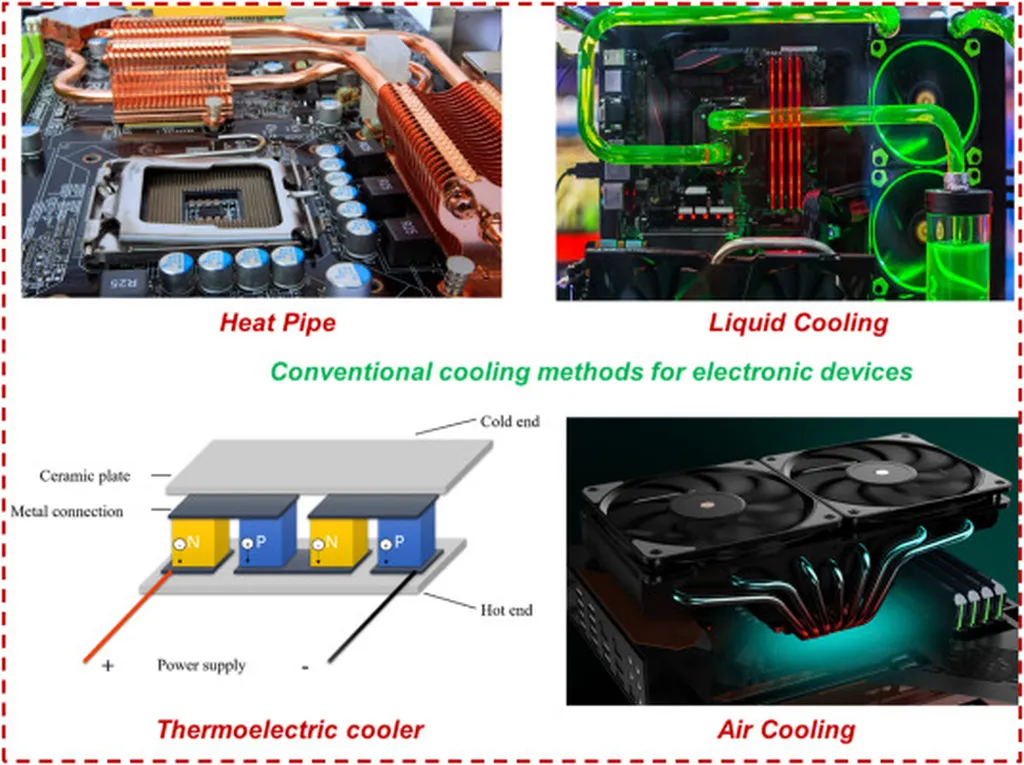
In the world of electronic equipment, managing heat is a critical challenge that can significantly impact performance and reliability. A recent study published in the journal *Измерение, мониторинг, управление, контроль* (Measurement, Monitoring, Management, Control) by B.S. Beisembayeva of Penza State University offers a promising solution to this age-old problem. The research introduces an innovative algorithm for thermophysical design that could revolutionize how we approach thermal management in electronic systems, with far-reaching implications for the energy sector.
Thermal management is a cornerstone of electronic design, ensuring that devices operate within safe temperature ranges to maintain reliability and efficiency. However, traditional methods often fall short in accurately predicting the thermal performance of cooling systems, leading to potential failures and inefficiencies. Beisembayeva’s research addresses this gap by proposing an algorithm that takes into account the actual thermal resistance of heat sinks, a crucial but often overlooked parameter.
“The problem of increasing the adequacy of the results of thermophysical design and construction, in conditions of the need to ensure a given reliability, does not lose its relevance,” Beisembayeva explains. Her research is aimed at enhancing the accuracy of thermophysical design by incorporating more comprehensive thermophysical parameters of heat-dissipating elements. This approach not only improves the reliability of electronic equipment but also has significant commercial impacts for the energy sector, where thermal management is paramount.
The algorithm developed by Beisembayeva is based on measuring the thermal resistance of heat sinks, a universal characteristic that combines parameters such as the effective area and thermal conductivity of the material. By integrating this data into the design process, engineers can achieve more precise and reliable thermal management solutions. This innovation could lead to more efficient cooling systems, reduced energy consumption, and extended lifespans for electronic devices.
The implications for the energy sector are substantial. As the demand for energy-efficient and reliable electronic systems grows, so does the need for advanced thermal management solutions. Beisembayeva’s research provides a robust framework for achieving these goals, potentially shaping the future of electronic design and energy efficiency.
“This algorithm, when applied at the stages of thermophysical design, makes it possible to take into account the actual value of the thermal resistance of heat sinks and thereby increase the completeness of data on the thermophysical parameters of heat sink elements of electronic equipment and electronic means,” Beisembayeva states. This enhanced accuracy could lead to significant advancements in the field, paving the way for more reliable and efficient electronic systems.
As the energy sector continues to evolve, the need for innovative thermal management solutions becomes increasingly critical. Beisembayeva’s research offers a promising path forward, providing a tool that could transform how we design and build electronic equipment. By incorporating more comprehensive thermophysical parameters, engineers can achieve greater reliability and efficiency, ultimately benefiting both the industry and consumers.
In a rapidly advancing technological landscape, Beisembayeva’s work stands out as a beacon of innovation, offering a solution that could shape the future of thermal management in electronic systems. As the energy sector continues to push the boundaries of efficiency and reliability, this research provides a crucial step forward, ensuring that electronic equipment can meet the demands of tomorrow.