
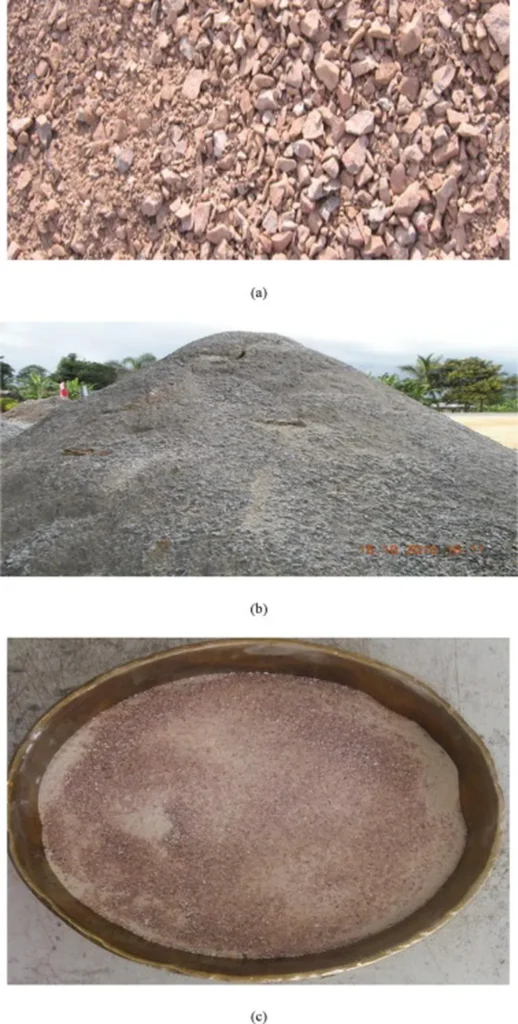
In the quest for sustainable construction practices, researchers have turned an innovative eye towards granite waste, a byproduct of the construction industry that often ends up in landfills. A recent study led by Lijun Dou from the School of Civil Engineering explores the potential of granite powder (GP) as a cement substitute in mortar, offering promising insights for the industry.
The study, published in the journal *Advances in Civil Engineering* (translated from Chinese as *Advances in Civil Engineering*), investigates the mechanical properties and microstructure of mortar when cement is partially replaced with granite powder. The findings suggest that granite powder could enhance certain properties of mortar, such as water retention and workability, while reducing density and setting time.
Dou and his team replaced cement with granite powder at various rates, ranging from 0% to 30%, across four strength grades of mortar (M5, M7.5, M10, and M15). They found that mortar consistency initially increased with the replacement rate, peaking at 15%, before decreasing. Compressive and flexural strengths followed a similar trend, with optimal performance at a 10% replacement rate.
“When replacement rates were less than 10%, the microaggregate and nucleation effects were dominant, producing denser mortar structures with reduced porosity,” Dou explained. However, rates exceeding 10% led to larger voids between aggregates and binder materials, compromising the mortar’s strength.
Scanning electron microscopy (SEM) images supported these observations, revealing that lower replacement rates enhanced the mortar’s microstructure. This research could have significant implications for the construction industry, particularly in reducing waste and lowering production costs.
The energy sector, which often requires robust and durable construction materials, could benefit from this innovation. By incorporating granite waste into mortar, companies could reduce their environmental footprint while maintaining, or even enhancing, the material’s performance.
As the construction industry continues to seek sustainable solutions, Dou’s research offers a compelling case for the use of granite powder as a cement substitute. The study not only highlights the potential for improved material properties but also underscores the importance of waste reduction in the construction process.
“This research opens up new possibilities for the construction industry,” Dou noted. “By utilizing granite waste, we can create more sustainable and cost-effective building materials without compromising on quality.”
As the industry moves towards more eco-friendly practices, innovations like these will be crucial in shaping the future of construction. The study’s findings could pave the way for further research and practical applications, ultimately contributing to a more sustainable and efficient construction sector.