
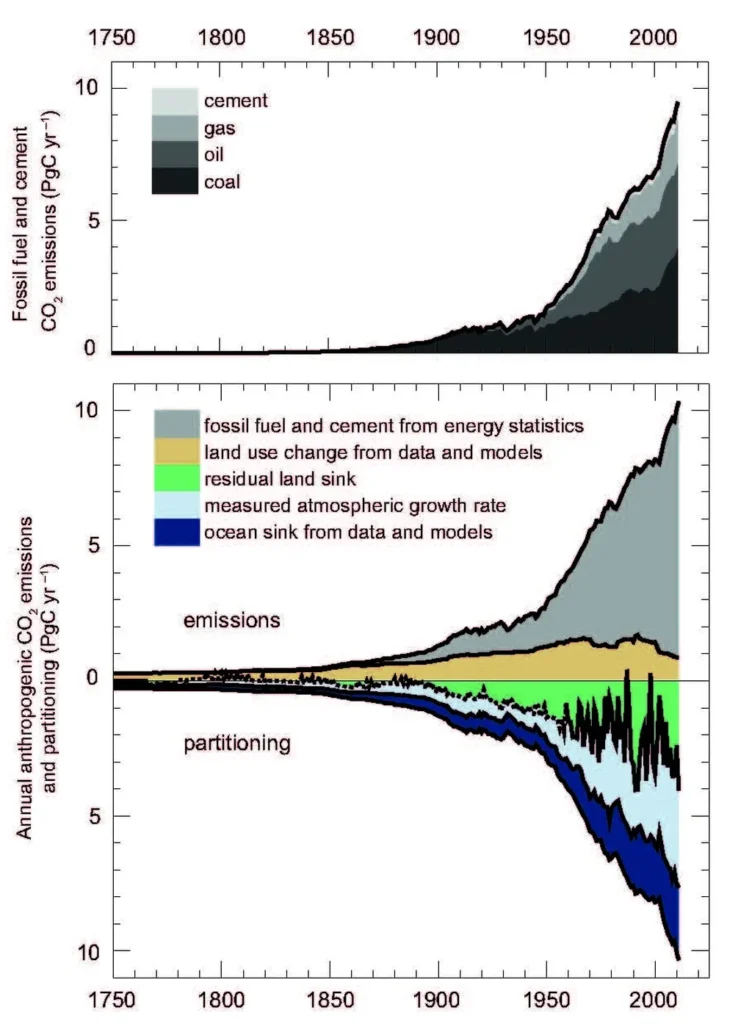
In the quest to decarbonize the built environment, the cement industry stands as both a challenge and an opportunity. As a primary driver of environmental impact, cement production accounts for a significant portion of global CO2 emissions, making it a critical focus for sustainability efforts. A recent study published in the journal *Resources, Environment and Sustainability* (translated as *Resources, Environment and Sustainable Development*) offers a promising approach to forecasting energy use and emissions in the cement sector, providing valuable insights for policymakers and industry stakeholders.
Led by Sobit Sapkota of the US Department of Energy’s Industrial Training and Assessment Center (UD-ITAC) at the University of Dayton, the research develops an integrated framework that combines a systematic review of forecasting methods with a comparative evaluation of the Grey Model (GM(1,1)) and the Markov-Chain Grey Model (MCGM). The study uses the cement sector of a rapidly developing economy as a case study, embedding forecasts within alternative scenarios—business-as-usual, efficiency improvement, and decline—to assess future pathways of energy use and CO2 emissions.
The findings are compelling. The Markov-Chain Grey Model (MCGM) significantly improves forecasting accuracy relative to the Grey Model (GM(1,1)) in this data-constrained and volatile industrial context. “The MCGM model enables robust scenario analysis, which is crucial for understanding the long-term environmental impacts of construction-related industries,” Sapkota explains. This enhanced accuracy is particularly valuable in a sector where data is often limited and technological and policy uncertainties abound.
The study’s scenario outcomes highlight the risk of rising energy demand and emissions that could undermine sustainability targets in the construction sector. However, efficiency pathways demonstrate alignment with international climate and development benchmarks, offering a glimmer of hope for achieving low-carbon development. “Our framework underscores the value of Grey–Markov forecasting as a transferable decision-support tool,” Sapkota notes. “It supports policymakers and sector stakeholders in evaluating the long-term environmental impacts of construction-related industries.”
The implications for the energy sector are substantial. As the cement industry grapples with the need to reduce its carbon footprint, accurate forecasting tools like the MCGM can help guide investment decisions, policy formulations, and technological innovations. By providing a clearer picture of future energy use and emissions, these tools can facilitate the transition to more sustainable practices, ultimately benefiting both the environment and the bottom line.
This research not only advances the field of forecasting in the cement sector but also sets a precedent for other construction-related industries. As the world continues to urbanize and infrastructure demands grow, the need for accurate, reliable forecasting tools will only increase. The framework developed by Sapkota and his team offers a valuable blueprint for navigating these challenges, paving the way for a more sustainable built environment.
In a world where the stakes are high and the margins for error are slim, the ability to forecast with precision is more important than ever. As the cement industry and other construction-related sectors strive to meet sustainability targets, tools like the MCGM will be indispensable. The research published in *Resources, Environment and Sustainability* marks a significant step forward, offering a beacon of hope in the quest for a greener, more sustainable future.