
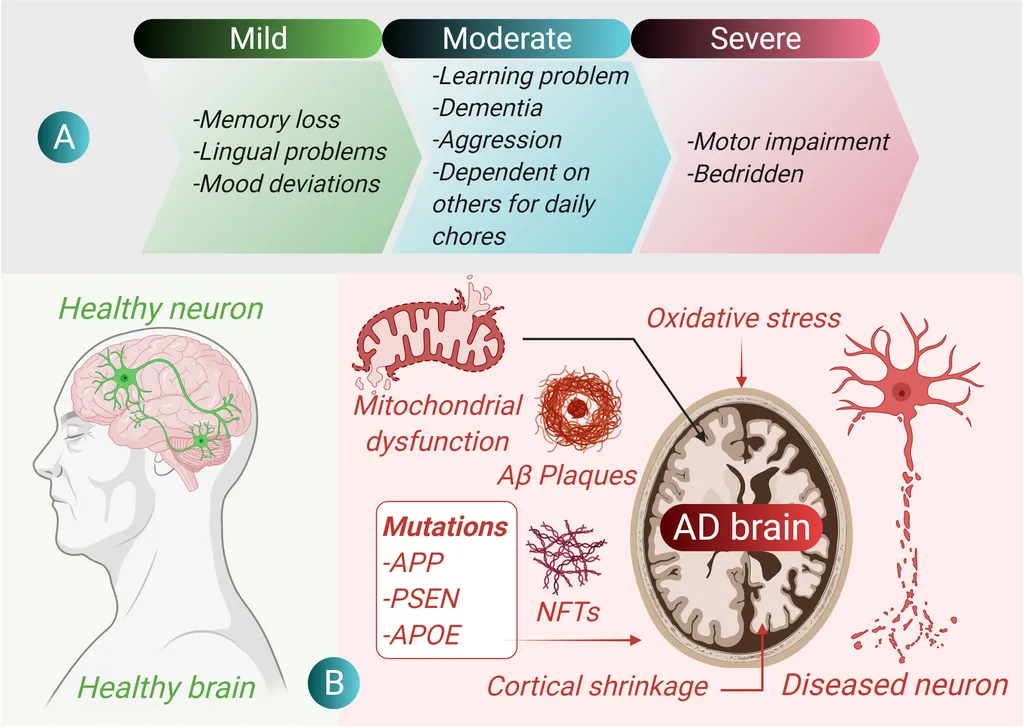
In the relentless pursuit of combating Alzheimer’s disease (AD), a progressive neurodegenerative disorder with limited treatment options, researchers are turning to an unlikely ally: nanomaterials. A recent bibliometric analysis published in *Discover Nano* (which translates to *探索纳米* in English) sheds light on the burgeoning field of nanoparticle technology and its potential to revolutionize AD diagnosis and therapy. The study, led by Zhao Ran from the Department of Laboratory Medicine at Shifang People’s Hospital, offers a comprehensive evaluation of the development trends and prospects in this cutting-edge research area.
The analysis, which scrutinized 2,837 publications from the Web of Science Core Collection, reveals a rapidly expanding field with significant contributions from 92 countries and regions, 2,953 institutions, and 13,294 authors. China emerged as the most productive country, with the Chinese Academy of Sciences leading the charge among institutions. Xiao-Gang Qu was identified as the most prolific author, highlighting the global and collaborative nature of this research endeavor.
One of the most influential studies in this field, according to the analysis, is the work of Saraiva et al., published in the *Journal of Controlled Release*. Their research, which garnered 1,069 citations, underscores the immense potential of nanoparticle drug delivery technology to cross the blood-brain barrier, a critical hurdle in AD treatment. “The ability of nanoparticles to navigate the blood-brain barrier opens up new avenues for targeted drug delivery and early diagnosis,” says Zhao Ran, lead author of the bibliometric study.
Emerging trends in the field point to a shift in research focus toward nasal delivery methods, extracellular vesicles, graphene quantum dots for diagnostics, and nanostructured lipid carriers for therapy. These advancements could pave the way for more effective and targeted treatments for AD, potentially transforming the landscape of neurodegenerative disease management.
The commercial implications of these findings are substantial, particularly for the energy sector. As the global population ages, the economic burden of AD is expected to rise, creating a pressing need for innovative solutions. Nanomaterial-based technologies offer a promising avenue for developing cost-effective and scalable treatments, which could alleviate some of the financial strain on healthcare systems and society at large.
“Current focus involves developing targeted nanoparticle systems to overcome the blood–brain barrier, mitigate Aβ pathology, and enable early diagnosis,” Zhao Ran explains. Future work should prioritize mechanistic studies and clinical trials to translate potential into practical applications, ultimately bringing these groundbreaking technologies from the lab to the patient.
As the field of nanomaterial-based AD research continues to expand, the insights gleaned from this bibliometric analysis will be invaluable in guiding future developments. By fostering collaboration and innovation, researchers can harness the power of nanoparticle technology to combat one of the most pressing health challenges of our time. With the publication of this study in *Discover Nano*, the stage is set for a new era in Alzheimer’s disease research and treatment.