
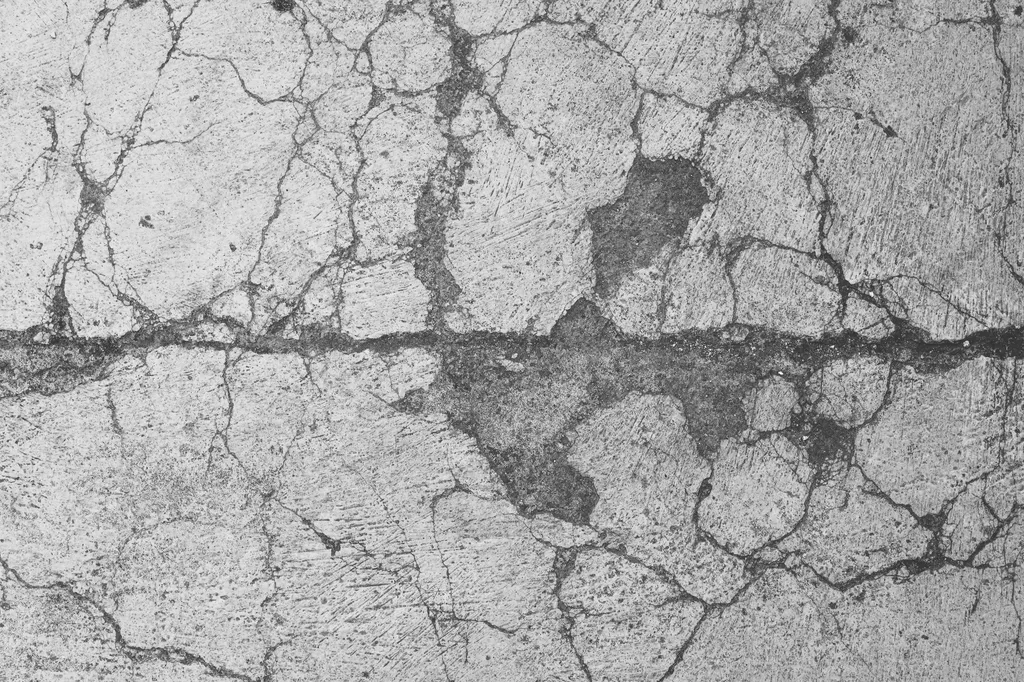
In the realm of construction and materials science, a groundbreaking study has emerged that promises to reshape our understanding of concrete’s behavior over time. Published in the journal “Structural Mechanics of Engineering Constructions and Buildings” (translated from Russian as “Stroitel’naya Mekhanika Inzhenernykh Konstruktcii i Sooruzhenii”), the research, led by Evgeny A. Larionov from RUDN University, delves into the rheological equations of state of concrete, offering insights that could significantly impact the energy sector and beyond.
Concrete, a ubiquitous material in construction, is known for its complex behavior under load, particularly its tendency to creep—deform slowly over time under constant stress. This phenomenon poses challenges for long-term structural integrity, especially in large-scale infrastructure projects such as dams, bridges, and energy facilities. Larionov’s research addresses these challenges head-on by proposing a quasilinear representation of the nonlinear rheological equation of concrete state. This approach is derived from the concept of statistical strength distribution of individual fractions that make up a structural element.
One of the key innovations in Larionov’s work is the application of L. Boltzmann’s principle of superposition of creep deformations. For ageless concrete, this principle is realized through increments of structural stress of fractions capable of force resistance under non-decreasing loading. For aging concrete, the superposition of partial increments of deformations generated by increments in stress levels is implemented, a departure from previous approaches that leads to a more accurate consideration of concrete aging.
“This leads to the correct consideration of concrete aging, clarifying the type of known rheological equations,” Larionov explains. The quasilinear forms of rheological equations derived from this research are particularly convenient for practical applications, offering a simplified yet accurate model of concrete’s behavior.
The implications of this research are far-reaching, especially for the energy sector. Structures such as nuclear power plants, wind turbines, and large-scale energy storage facilities rely on concrete for their foundational stability. Understanding and predicting concrete creep and stress relaxation are crucial for ensuring the long-term safety and efficiency of these structures. Larionov’s work provides a more precise tool for engineers and scientists to model and mitigate the effects of creep, potentially extending the lifespan of critical infrastructure and reducing maintenance costs.
Moreover, the concept of the strength structure of concrete and the identity of the aging functions of strength, modulus of elasticity, and creep allow for the reduction of the creep equation to a linear differential equation with constant coefficients. This simplification is a boon for solving stress relaxation problems, which are vital in the calculations of structures designed for long-term safety.
As the energy sector continues to evolve, with a growing emphasis on renewable energy and large-scale infrastructure projects, the need for advanced materials science becomes ever more pressing. Larionov’s research offers a significant step forward in this arena, providing a robust framework for understanding and predicting the behavior of one of the most widely used construction materials.
In the words of Larionov, “This simplifies, in particular, the solution of stress relaxation problems, which are important in the calculations of structures for long-term safety.” The practical applications of this research are vast, and its potential to influence future developments in the field is immense.
As the construction and energy sectors continue to push the boundaries of what is possible, the insights provided by Larionov’s research will undoubtedly play a crucial role in shaping the future of materials science and engineering.