
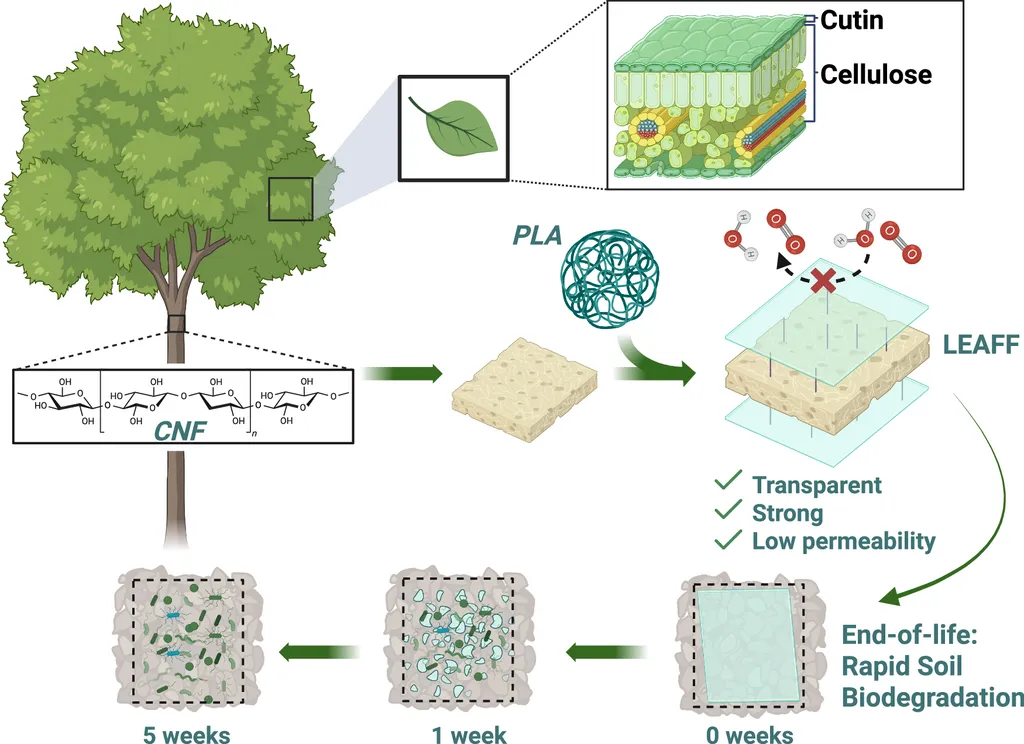
In a significant stride towards sustainable materials, researchers have developed a novel approach to enhance the properties of polylactic acid (PLA)/crystalline cellulose (CC) composites, offering a promising alternative to non-biodegradable plastics in the food packaging industry. The study, led by Laura V. Sánchez-Picón from the Grupo de Investigación en Materiales Poliméricos (GIMAPOL) at the Universidad Francisco de Paula Santander, introduces glycerol citrate (GC) as a compatibilizing agent, addressing the long-standing issue of incompatibility between PLA and CC.
The research, published in Discover Materials (translated as “Descubrir Materiales”), demonstrates that GC, a biodegradable, inexpensive, and non-toxic compound, significantly improves the interactions between PLA and CC. “The Cole-Cole diagram and scanning electron microscopy analysis provided clear evidence of enhanced interactions between the components,” Sánchez-Picón explained. This improvement in compatibility translates into enhanced mechanical properties, with tensile modulus and strength increasing with GC content. The tensile strength was enhanced by up to 78.7%, a substantial improvement for potential commercial applications.
The study also revealed that GC does not act as a nucleating agent for PLA, and the thermal stability of the composites remained statistically identical with or without GC. However, the addition of GC did reduce moisture resistance, which could be a consideration for specific applications. On the positive side, the biodegradability rate of the composites increased dramatically, by up to 610%, and the opacity of the materials also saw a maximum enhancement of 39.3%.
The implications of this research are far-reaching for the energy and packaging sectors. As the demand for sustainable and eco-friendly materials continues to grow, the development of cost-effective, biodegradable composites like those described in this study could revolutionize the industry. “This research opens up new possibilities for the use of PLA/CC composites in various applications, particularly in the food packaging sector,” Sánchez-Picón noted.
The enhanced mechanical properties and biodegradability of these composites make them an attractive option for manufacturers looking to reduce their environmental footprint. The use of GC as a compatibilizing agent not only improves the performance of the composites but also aligns with the growing trend towards green chemistry and sustainable materials.
As the world grapples with the challenges of plastic waste and environmental degradation, innovations like this offer a glimmer of hope. The study by Sánchez-Picón and her team represents a significant step forward in the quest for sustainable materials, paving the way for a greener future in the construction and packaging industries.