
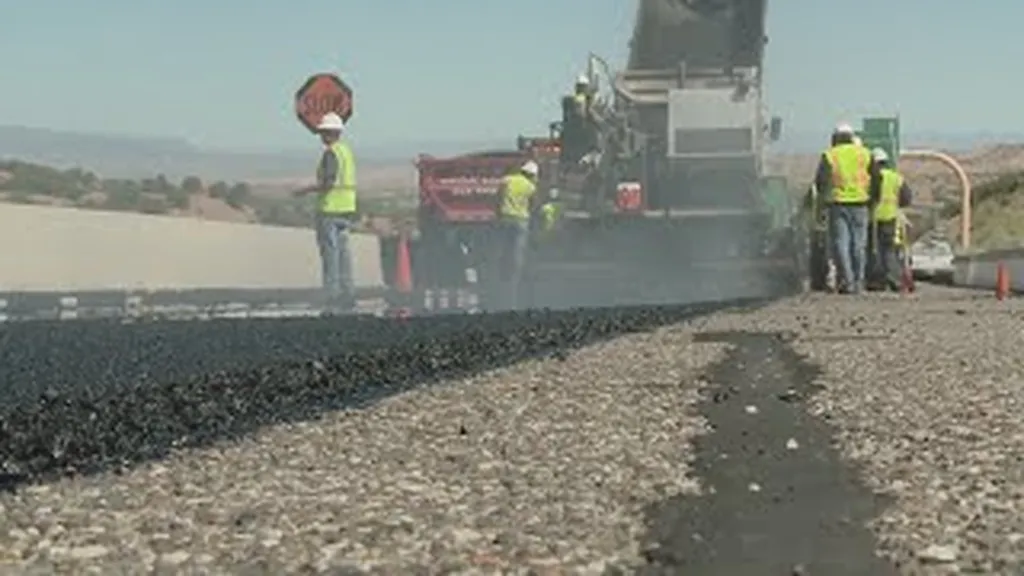
In the world of road construction, the bond between layers of asphalt is a critical factor that can mean the difference between a smooth ride and a crumbling highway. A recent study published in the journal *Discover Civil Engineering* (translated from Russian as “Exploring Civil Engineering”) sheds new light on how the texture of asphalt surfaces and the application rate of tack coat—a sticky layer that helps bond new asphalt to existing pavement—can significantly impact the strength of this bond. The research, led by Muhammad Tasnim Alam from the University of New Mexico’s Civil, Construction & Environmental Engineering department, offers insights that could revolutionize how we build and maintain our roads, with significant implications for the energy sector.
Alam and his team set out to explore the interaction between interface texture and tack coat application rate on the interface shear strength (ISS) of asphalt concrete. “We wanted to understand how these two factors work together to influence the bond between layers of asphalt,” Alam explains. “This is crucial for ensuring the longevity and performance of our roadways.”
To conduct their study, the researchers prepared double-layered asphalt concrete specimens using a combination of new hot-mix asphalt (HMA) and aged field cores. They varied the texture depths and orientations of the surfaces and applied tack coat at different rates—0, 0.04, 0.06, and 0.08 gallons per square yard. The specimens were then subjected to direct shear tests to evaluate their interface shear strength under different conditions.
The results were revealing. The highest ISS was observed at a tack coat application rate of 0.06 gal/yd² in most conditions. The study also found that texture depth was significant in all groups, while the application rate was significant in most cases except for perpendicular texture-shear orientations. “We found that controlled grinding or grooving of the surface can enhance interlayer bonding and reduce the dependence on tack coat,” Alam notes. “This is a game-changer for the industry, as it means we can potentially reduce the amount of tack coat used, which has both economic and environmental benefits.”
The implications of this research are far-reaching, particularly for the energy sector. Asphalt production and application are energy-intensive processes, and any reduction in material usage or improvement in efficiency can lead to significant energy savings. “By optimizing the texture and tack coat application rate, we can not only improve the performance of our roads but also reduce the energy footprint of road construction,” Alam explains.
The study also highlighted the importance of texture orientation. Perpendicular orientations yielded the highest ISS, followed by 45° and parallel orientations. This finding suggests that the way we texture asphalt surfaces can have a significant impact on their performance.
As we look to the future, the insights from this research could shape the way we design and construct our roadways. By understanding the interplay between surface texture and tack coat application rate, we can build stronger, more durable roads that require less maintenance and have a lower environmental impact. “This is just the beginning,” Alam says. “There’s still much to explore, but the potential is enormous.”
For professionals in the construction and energy sectors, this research offers a glimpse into the future of road construction. By embracing these findings, we can pave the way for more efficient, sustainable, and resilient infrastructure. As published in *Discover Civil Engineering*, this study is a testament to the power of innovation and the potential for transformative change in the field of civil engineering.