
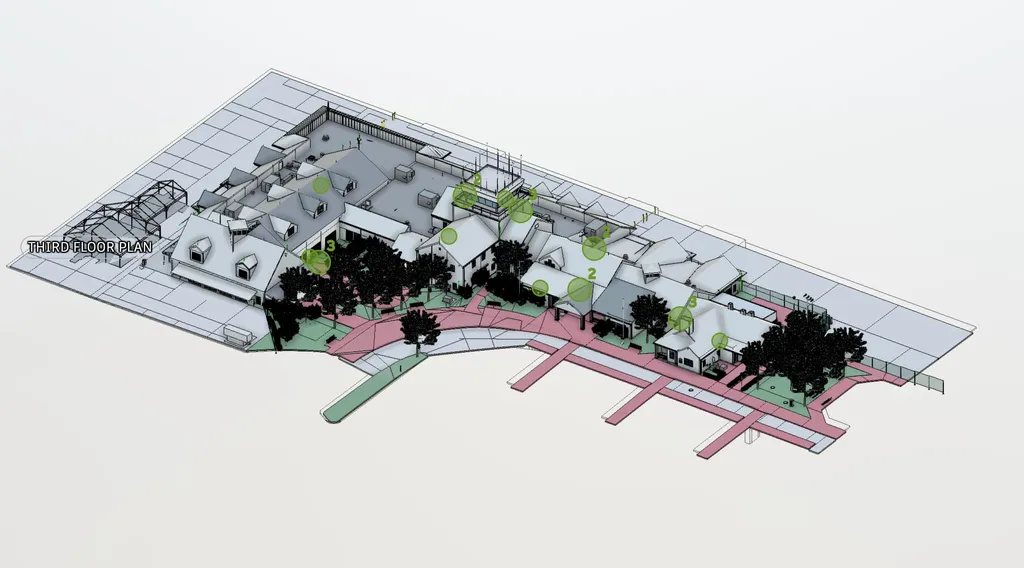
In the rapidly evolving landscape of architecture and construction, a groundbreaking technology is making waves, promising to redefine how buildings are designed, constructed, and managed. Digital twin technology, a live, data-driven digital replica of physical buildings, is at the forefront of this transformation. Unlike static 3D models, digital twins evolve with time, integrating real-world data from sensors, IoT devices, and user inputs. This innovation is not just a technological upgrade; it’s a paradigm shift that bridges the physical and digital worlds, offering unprecedented insights into building performance.
Ahmad Abuzaid, a leading expert from Dawood Engineering Inc. in the USA and the University of Applied Sciences in Nysa, Poland, has been at the helm of exploring this technology’s potential. “Digital twins allow us to monitor, analyze, and optimize building performance in real-time,” Abuzaid explains. “This capability is revolutionizing how we approach architectural design and facility management, extending the capabilities of Building Information Modelling (BIM) into predictive modelling.”
The power of digital twins lies in their ability to incorporate live feedback loops, enabling professionals to simulate scenarios, track changes, and predict future behavior of structures based on historical and real-time data. When paired with platforms like Revit and AutoCAD, and enhanced with technologies such as point cloud scanning, digital twins become invaluable tools for renovation, retrofitting, and complex site analysis. “This technology is particularly valuable in smart building development and urban planning,” Abuzaid adds. “It offers real-time visibility into energy use, occupancy, system performance, and lifecycle optimization.”
The commercial impacts for the energy sector are substantial. Digital twins enable precise monitoring and management of energy consumption, leading to significant cost savings and reduced environmental impact. By providing real-time data on building performance, digital twins help identify inefficiencies and optimize energy use, making them an essential tool for achieving sustainability goals.
As this innovation matures, it is setting a new standard for how buildings are designed, constructed, operated, and maintained across their full lifecycle. The research by Ahmad Abuzaid, published in the journal ‘Budownictwo o Zoptymalizowanym Potencjale Energetycznym’ (translated as ‘Construction with Optimized Energy Potential’), highlights the transformative potential of digital twins. This technology is not just a tool; it’s a catalyst for a smarter, more efficient, and sustainable future in the construction and energy sectors. As we stand on the brink of this digital revolution, the question is not if digital twins will shape the future, but how quickly we can harness their full potential to redefine the built environment.