
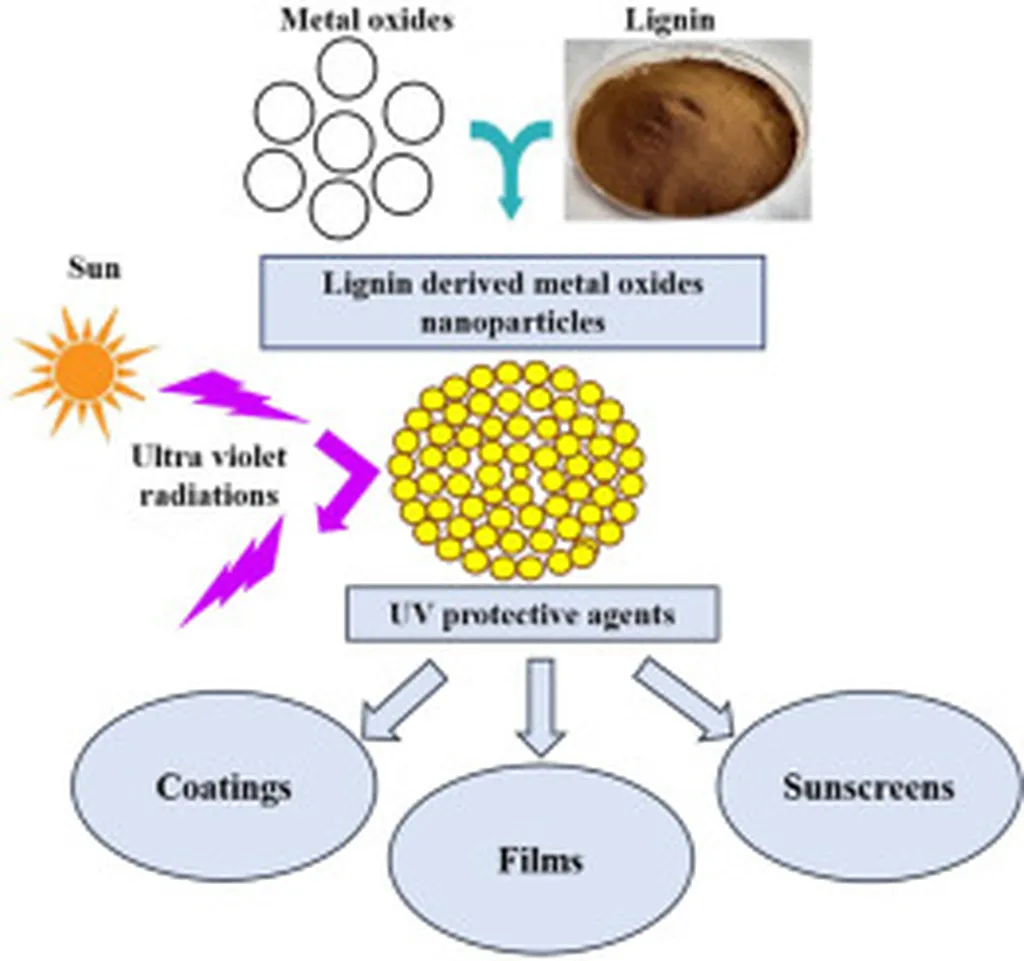
In a significant stride towards sustainable materials, researchers have developed a novel composite that enhances ultraviolet (UV) resistance and mechanical performance using lignin, a natural polymer found in plants. The study, led by A.K. Sidharth from the Bernal Institute at the University of Limerick, Ireland, explores the potential of lignin nanoparticles (nL) to reinforce Elium®, a recyclable thermoplastic acrylic resin. This innovation could have profound implications for the energy sector, particularly in applications requiring durable, high-performance materials.
The research, published in ‘Composites Part C: Open Access’ (which translates to ‘Composites Part C: Open Access’ in English), demonstrates that incorporating lignin nanoparticles into Elium® significantly improves UV absorption and thermal stability. “We found that at a 0.5% loading of lignin nanoparticles, the composite exhibited a 54% improvement in UV shielding,” Sidharth explained. This enhancement, coupled with a 30% increase in tensile strength and a 22% boost in flexural strength, makes the material a promising candidate for various industrial applications.
The energy sector, in particular, stands to benefit from this advancement. Materials with superior UV resistance are crucial for outdoor and high-exposure environments, such as solar panels, wind turbine blades, and other renewable energy infrastructure. The recyclability of Elium® adds another layer of sustainability, aligning with the growing demand for eco-friendly solutions.
“This study is the first to report lignin nanoparticle reinforcement in Elium® resin,” Sidharth noted. The findings highlight the multifunctional potential of lignin nanoparticles, which can impart enhanced properties to recyclable thermoplastic composites. The research not only advances the field of polymer matrix composites but also paves the way for future developments in sustainable materials.
As the energy sector continues to evolve, the need for high-performance, durable, and environmentally friendly materials will only grow. This innovative composite could play a pivotal role in meeting these demands, offering a sustainable alternative to conventional materials. The study’s success underscores the importance of exploring natural polymers like lignin and their potential to revolutionize the materials science landscape.